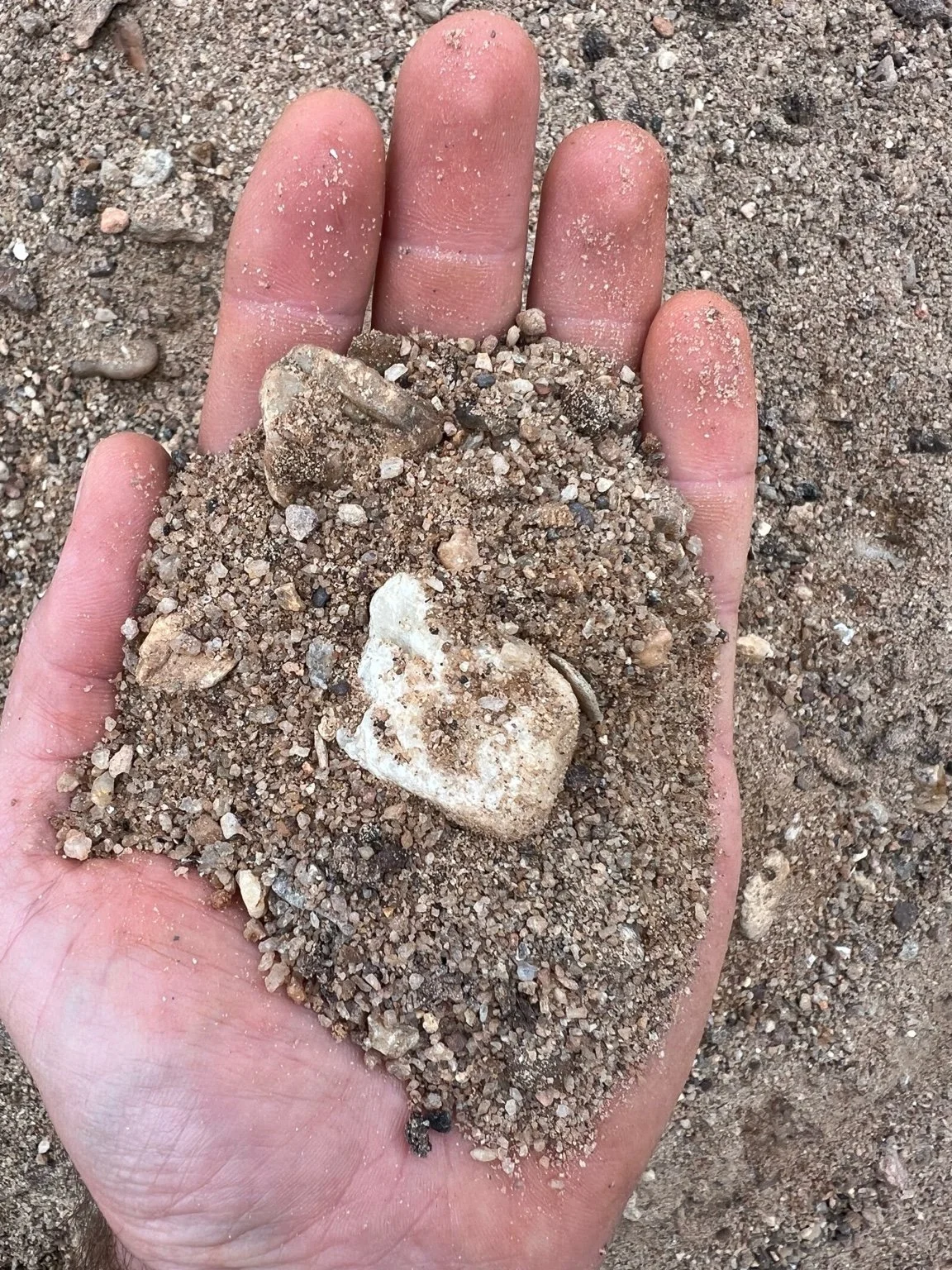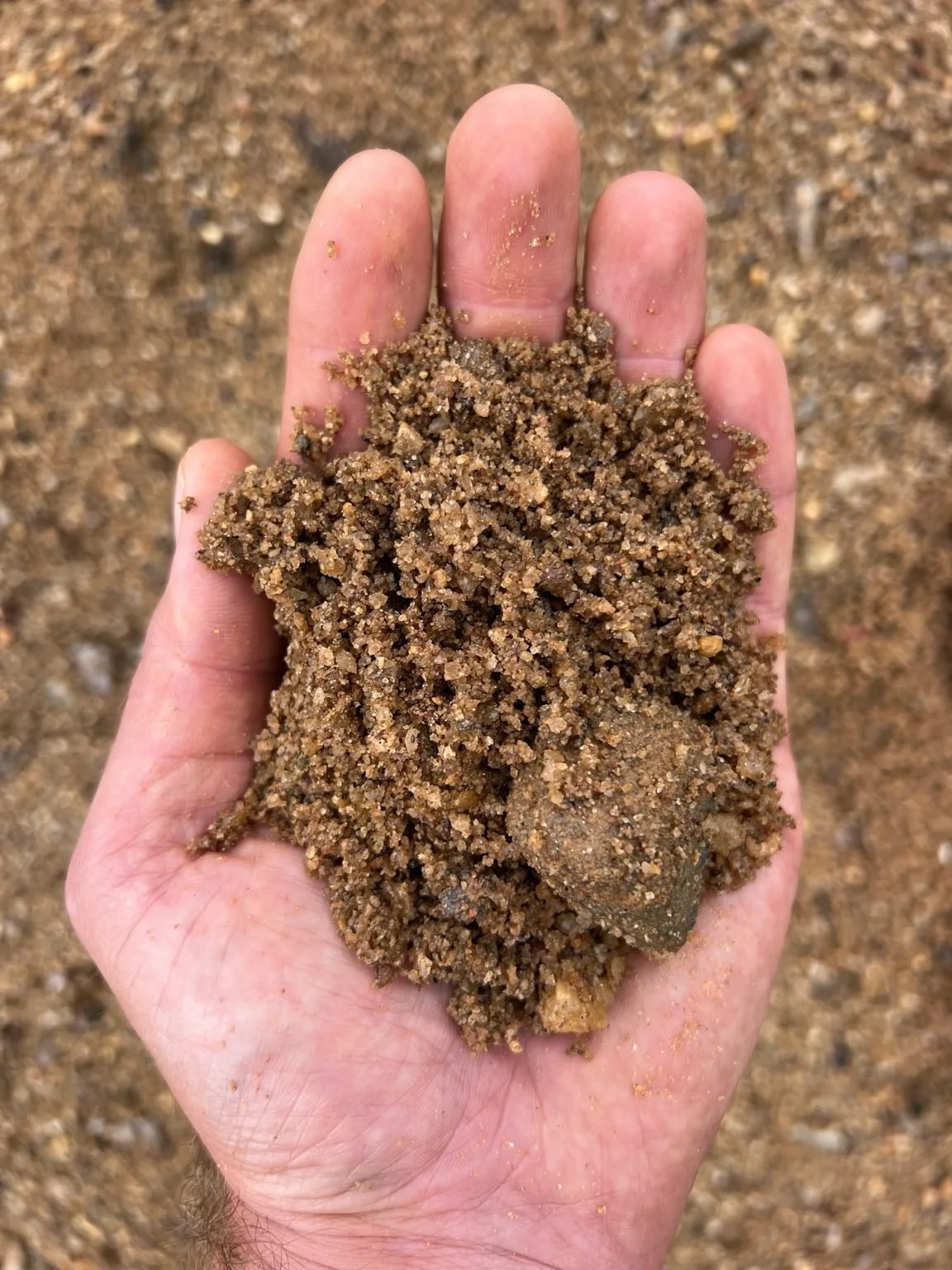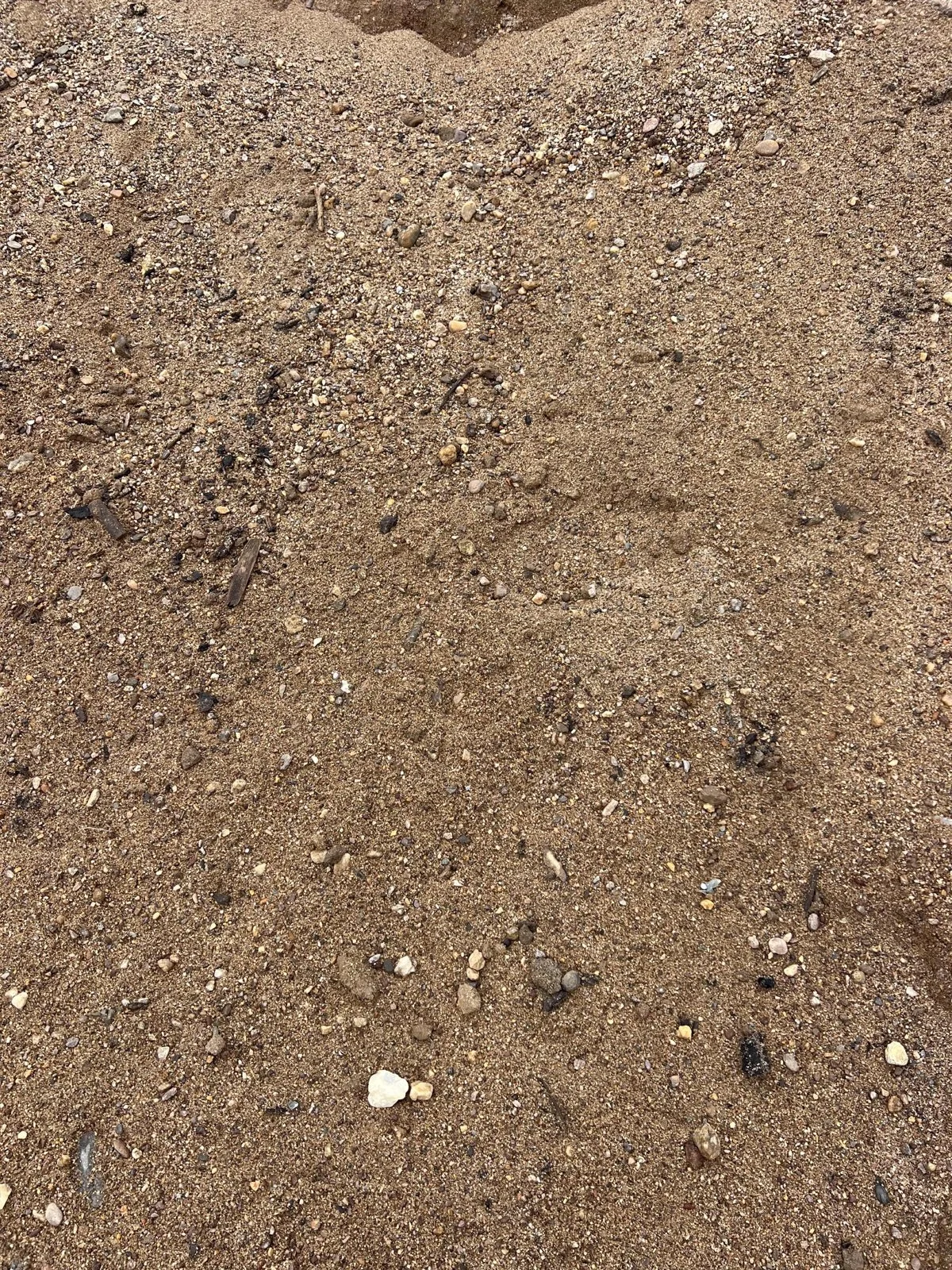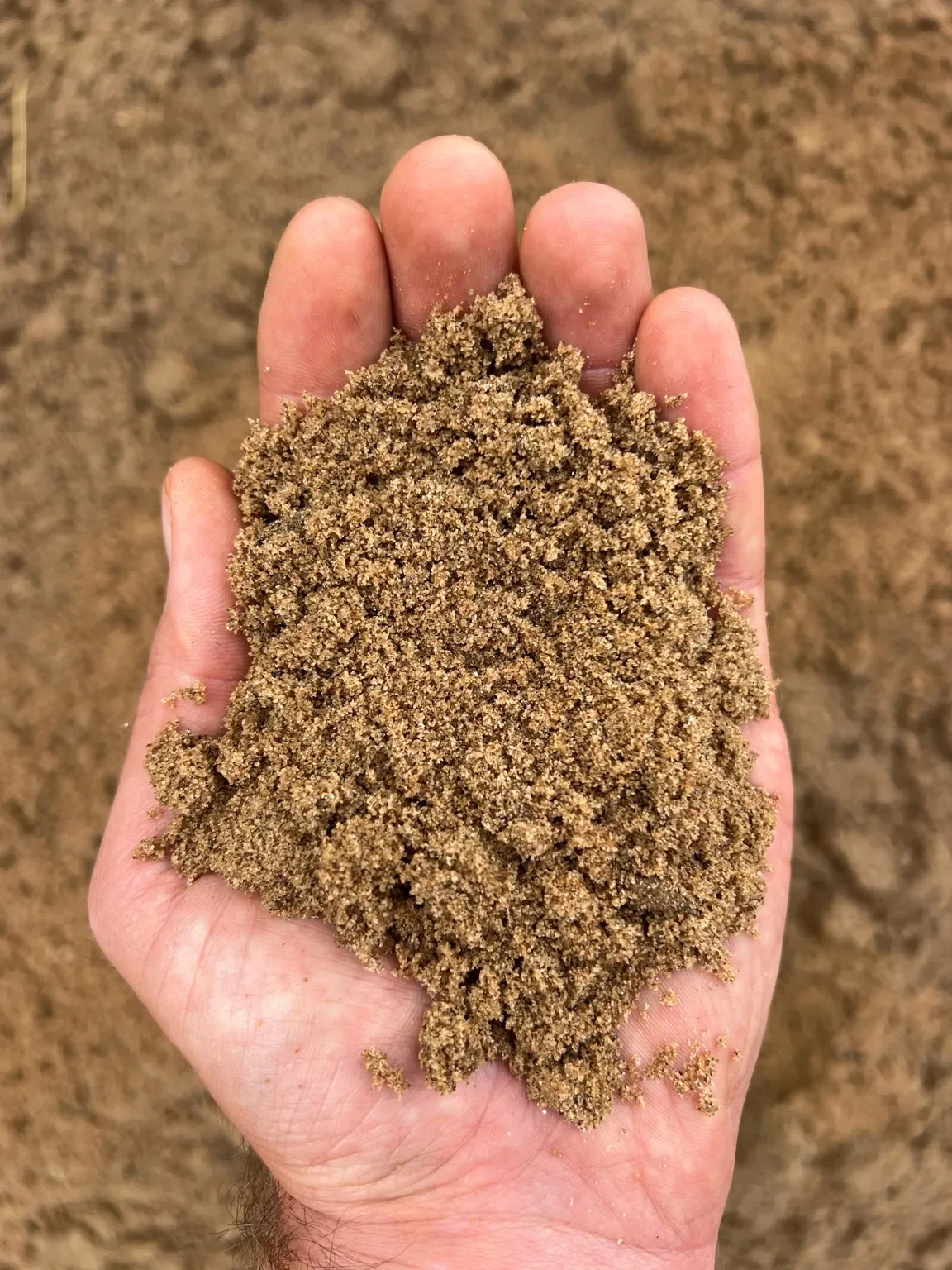
 Image 1 of 2
 Image 2 of 2
Jump to:
About | Common Uses | Coverage & Yield | FAQ | Disclaimer
How Much Masonry Sand Do I Need?
Calculator assumes Masonry Sand covers approximately 18 cubic feet per ton. Coverage estimates may vary based on moisture content, placement depth, compaction, settling, spreading method, and site conditions.
Ordering note: Masonry Sand is sold in 15–20 ton truckload quantities only. Smaller estimates are shown for planning purposes so you can compare material needs before ordering.
Sales tax varies by county and is added at checkout.
Masonry Sand is sold in 15–20 ton truckload quantities only. Smaller estimates are for planning and material comparison. Truck delivery count is an estimate based on approximately 20 tons per delivery. Final load count may vary based on material type, truck capacity, legal weight limits, loading conditions, and scheduling.
About Masonry Sand
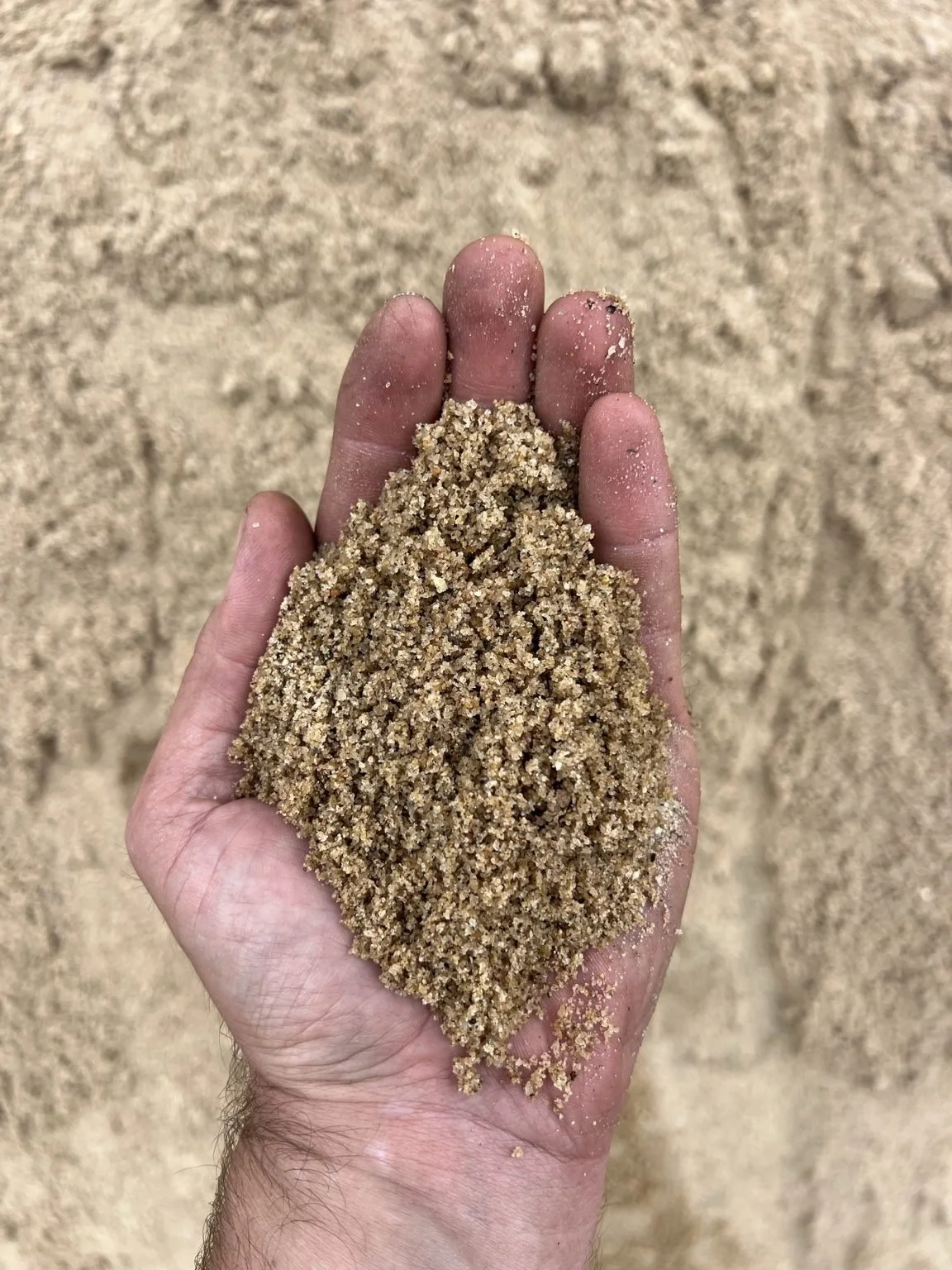
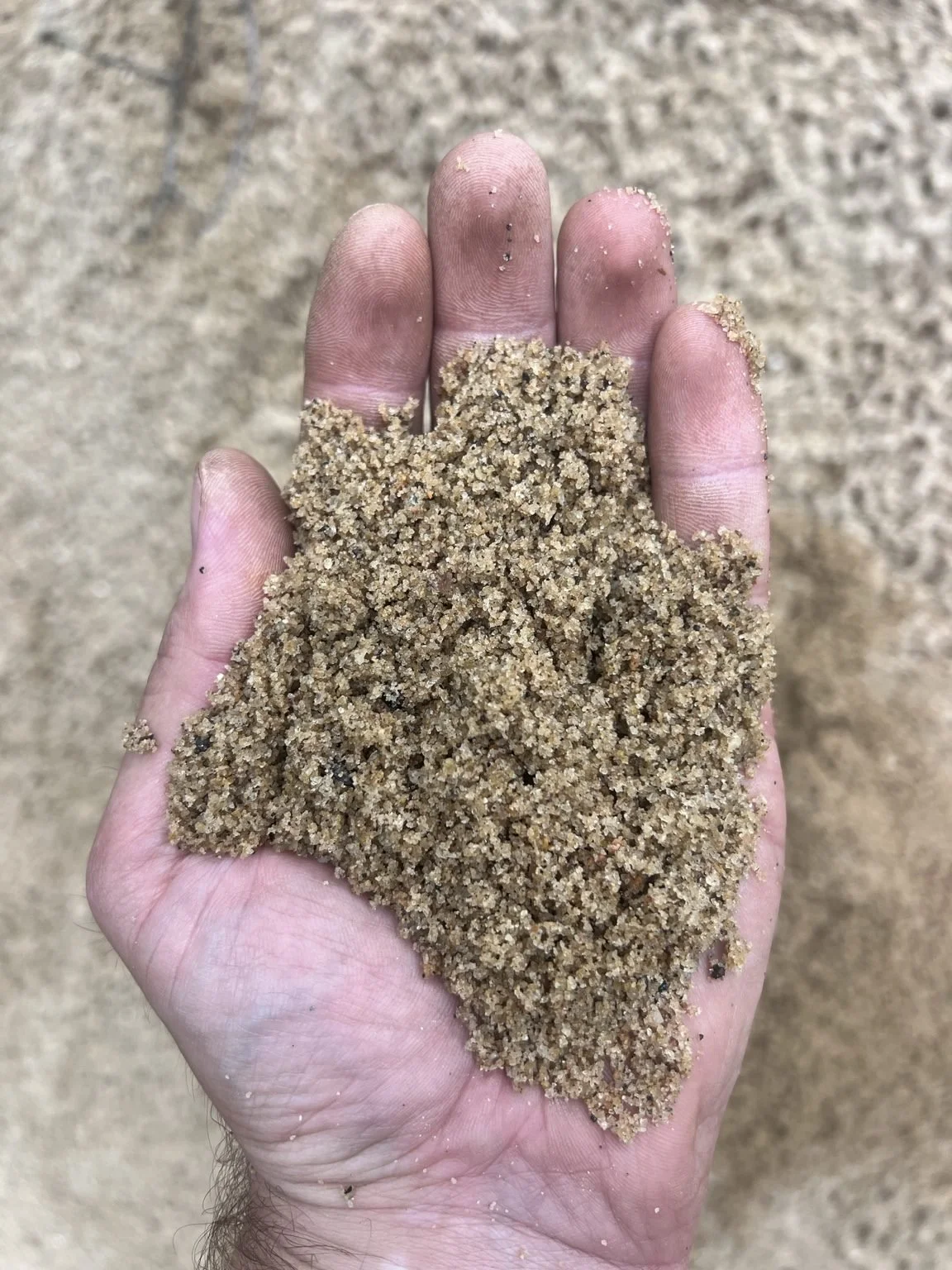
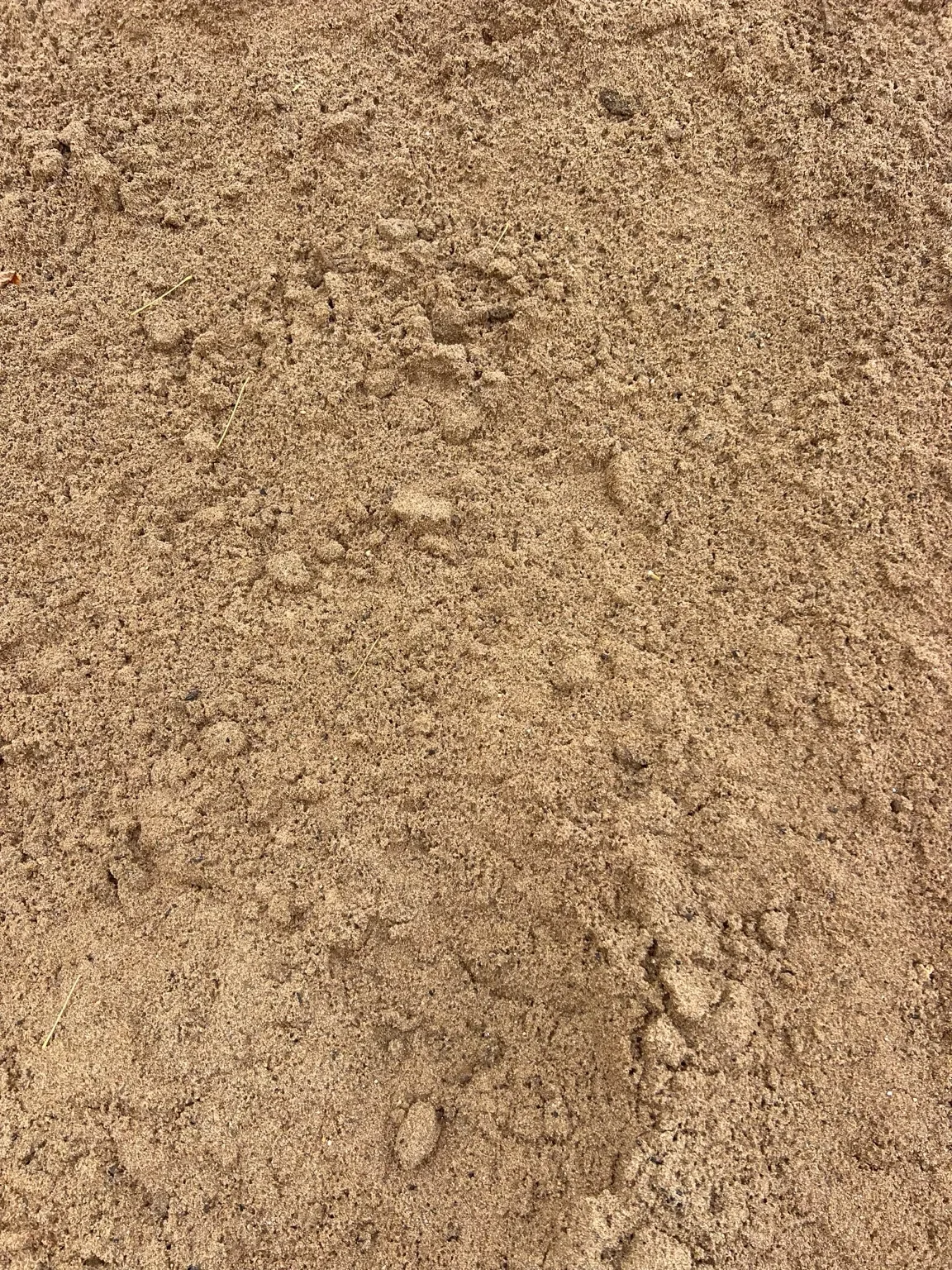
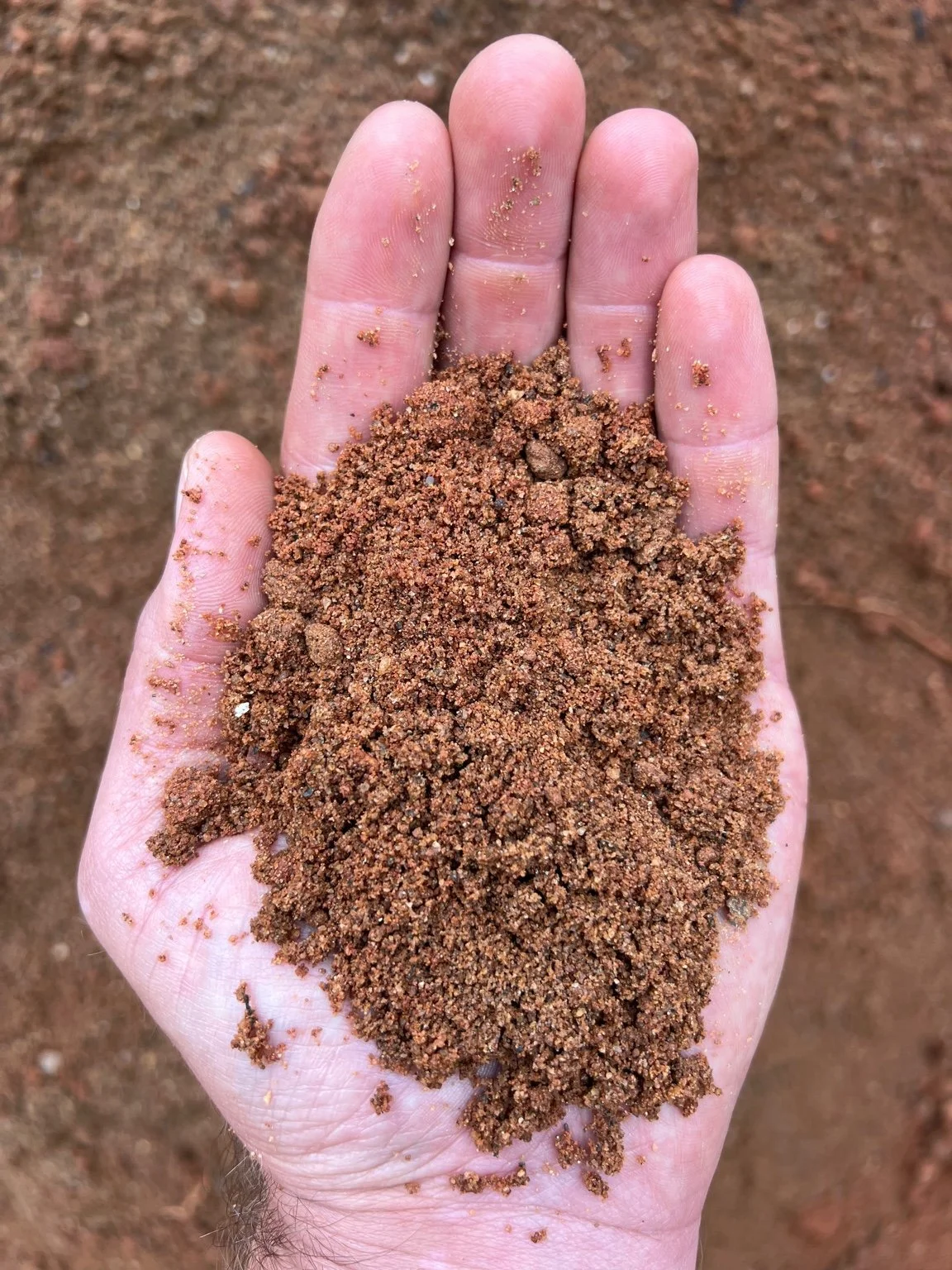
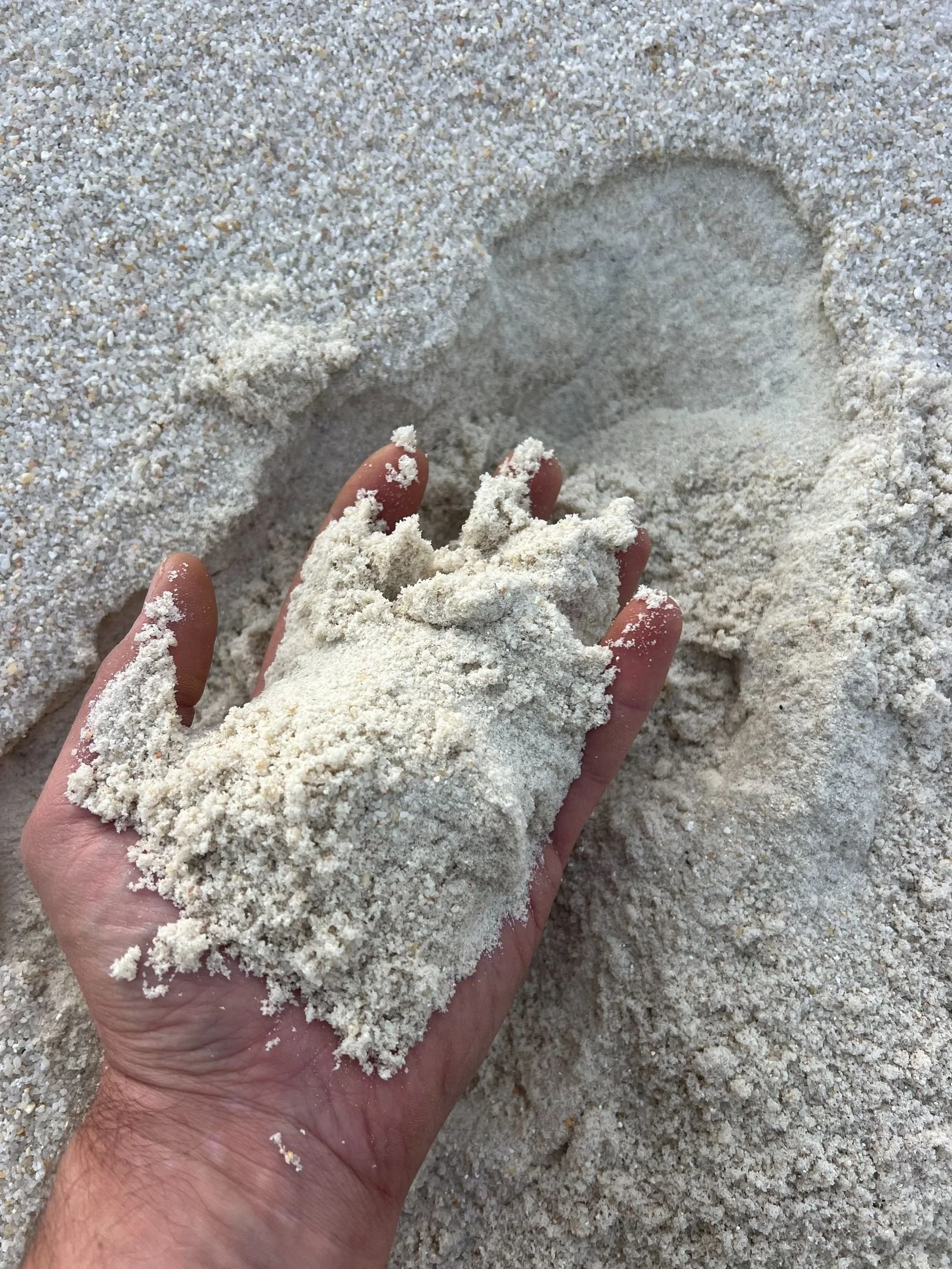
Masonry Sand, also known as Mortar Sand, is a fine washed sand commonly used for masonry work, mortar mixes, paver joints, leveling, play areas, and general landscaping applications. It has a smoother texture than coarser sand products such as Washed River Sand.
Because of its fine particle size, Masonry Sand is commonly used for brick, block, and stonework where a workable sand is needed for mortar. It is also used for paver joints, patio projects, play areas, and certain leveling or landscaping applications.
Masonry Sand is different from Washed River Sand because it is finer and smoother. Washed River Sand is coarser and is commonly used for drainage, concrete, pipe bedding, arenas, and general fill applications.
Masonry Sand is also different from compactable base materials such as Crusher Run or Granite Screenings. It may be used in certain paver and patio applications, but it is not intended to replace a proper compacted aggregate base where strength and stability are needed.
Palmetto Sand and Gravel sells Masonry Sand by the ton and delivers it by tri-axle dump truck throughout Spartanburg, Greenville, Cherokee, Laurens, and Union Counties in Upstate South Carolina.
Common Uses in Upstate South Carolina
Mortar Mixes
Commonly used as the sand component in mortar for brick, block, and stonework.
Brick & Block Work
Used in masonry projects where fine, workable sand is needed.
Stonework
Used in mortar applications for natural stone, veneer stone, and other masonry projects.
Paver Joints
Frequently swept into joints between pavers, bricks, and stones.
Patio Projects
Used in some patio and walkway applications where a fine sand is desired.
Play Areas
Sometimes used in recreational areas where a softer sand surface is desired.
Above-Ground Pool Bases
Sometimes used as a smooth sand layer under above-ground pool liners when allowed by the pool manufacturer or installer. The sand should be placed evenly, shaped properly, and checked for debris or sharp particles before liner installation.
Leveling Projects
Used in certain yard, landscape, and surface-leveling applications.
Landscaping Projects
Used in various landscape and site improvement projects where fine sand is needed.
Coverage & Yield
Calculator Assumption: Approximately 18 cubic feet per ton.
Approximate Coverage: About 215 square feet at 1 inch deep per ton.
Approximate Coverage: About 108 square feet at 2 inches deep per ton.
Approximate Coverage: About 72 square feet at 3 inches deep per ton.
Note: Actual coverage varies based on moisture content, placement depth, spreading method, compaction, and site conditions.
FAQ
What is Masonry Sand?
Masonry Sand is a fine washed sand commonly used for mortar mixes, masonry work, paver joints, play areas, leveling, and landscaping projects.
Is Masonry Sand the same as Mortar Sand?
Yes. Masonry Sand and Mortar Sand are commonly used names for similar fine sand materials used in masonry applications.
What is Masonry Sand used for?
Common uses include mortar mixes, brickwork, blockwork, stonework, paver joints, patio projects, play areas, leveling, and landscaping.
What is the difference between Masonry Sand and Washed River Sand?
Masonry Sand is finer and smoother than Washed River Sand. Washed River Sand is coarser and is commonly used for drainage, concrete, pipe bedding, arenas, and general fill applications.
How much does one ton of Masonry Sand cover?
One ton of Masonry Sand covers approximately 215 square feet at 1 inch deep, 108 square feet at 2 inches deep, or 72 square feet at 3 inches deep. Coverage varies based on moisture content, placement depth, spreading method, and site conditions.
How much does a dump truck load of Masonry Sand cost?
Masonry Sand is $65 per ton and has a 15-ton minimum order. A 15-ton order is $975 before tax and qualifies for free delivery within our standard service area. A 20-ton full truckload would be $1,300 before tax. Final load size may vary depending on moisture content, truck capacity, legal weight limits, loading conditions, and scheduling.
Can Masonry Sand be used for paver joints?
Yes. Masonry Sand is commonly used to fill joints between pavers, bricks, and stones. It has a fine texture that can be swept into joints more easily than coarser sand products.
Can Masonry Sand be used under pavers?
Masonry Sand may be used in some paver applications, but compacted base materials such as Granite Screenings or Crusher Run are commonly used beneath pavers where a stable base is needed. Masonry Sand should not be used as a replacement for a proper structural base.
Can Masonry Sand be used for play areas?
Yes. Masonry Sand is sometimes used in play areas because of its fine, smooth texture. Because it is a natural sand product, color, moisture content, and texture may vary between loads.
Can Masonry Sand be used under a pool liner?
Masonry Sand is commonly used as a smooth sand layer under some above-ground pool liners because of its fine texture. The sand should be placed evenly, shaped properly, and checked for any debris or sharp particles before the liner is installed. Always follow the pool manufacturer’s or installer’s requirements, because base preparation can affect the liner, pool bottom, and warranty.
Can Masonry Sand be used for leveling yards?
Yes. Masonry Sand is sometimes used for light leveling and landscaping applications, but it is not a substitute for topsoil where plant growth is the goal.
Is Masonry Sand good for drainage?
Masonry Sand is not usually the first choice for drainage applications because it is finer than Washed River Sand. For drainage, pipe bedding, and water movement, coarser sand or clean stone may be a better fit depending on the project.
Can Masonry Sand be tailgate spread?
Tailgate spreading may be available when site conditions allow. Final determination is made by the driver at delivery. Tailgate spreading helps distribute material during unloading, but it does not guarantee a finished, graded, or level surface. Additional grading, raking, or site work may be required.
What is the minimum order quantity?
Masonry Sand has a 15-ton minimum order and is available in 15–20 ton truckload quantities only. Smaller calculator estimates are shown for planning purposes only, so customers can understand approximate material needs before ordering.
How is Masonry Sand delivered?
Masonry Sand is sold by the ton and delivered by tri-axle dump truck. Palmetto Sand and Gravel delivers Masonry Sand throughout Spartanburg, Greenville, Cherokee, Laurens, and Union Counties in Upstate South Carolina.
Disclaimer
Masonry Sand is a natural material. Color, texture, moisture content, and particle size may vary between loads and source locations. Quantities and coverage are approximate and subject to normal material variation, moisture content, placement depth, spreading method, and site conditions.
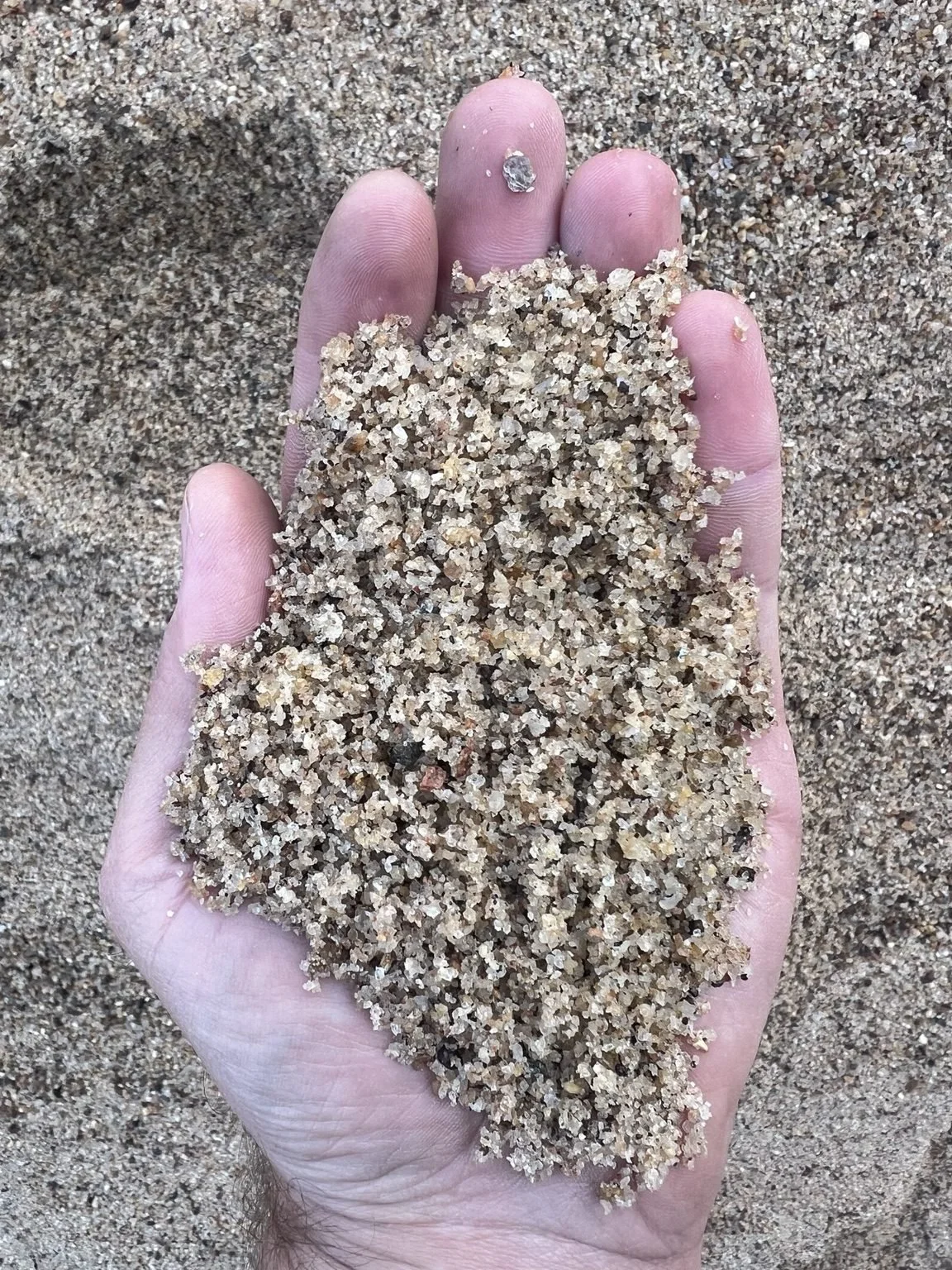
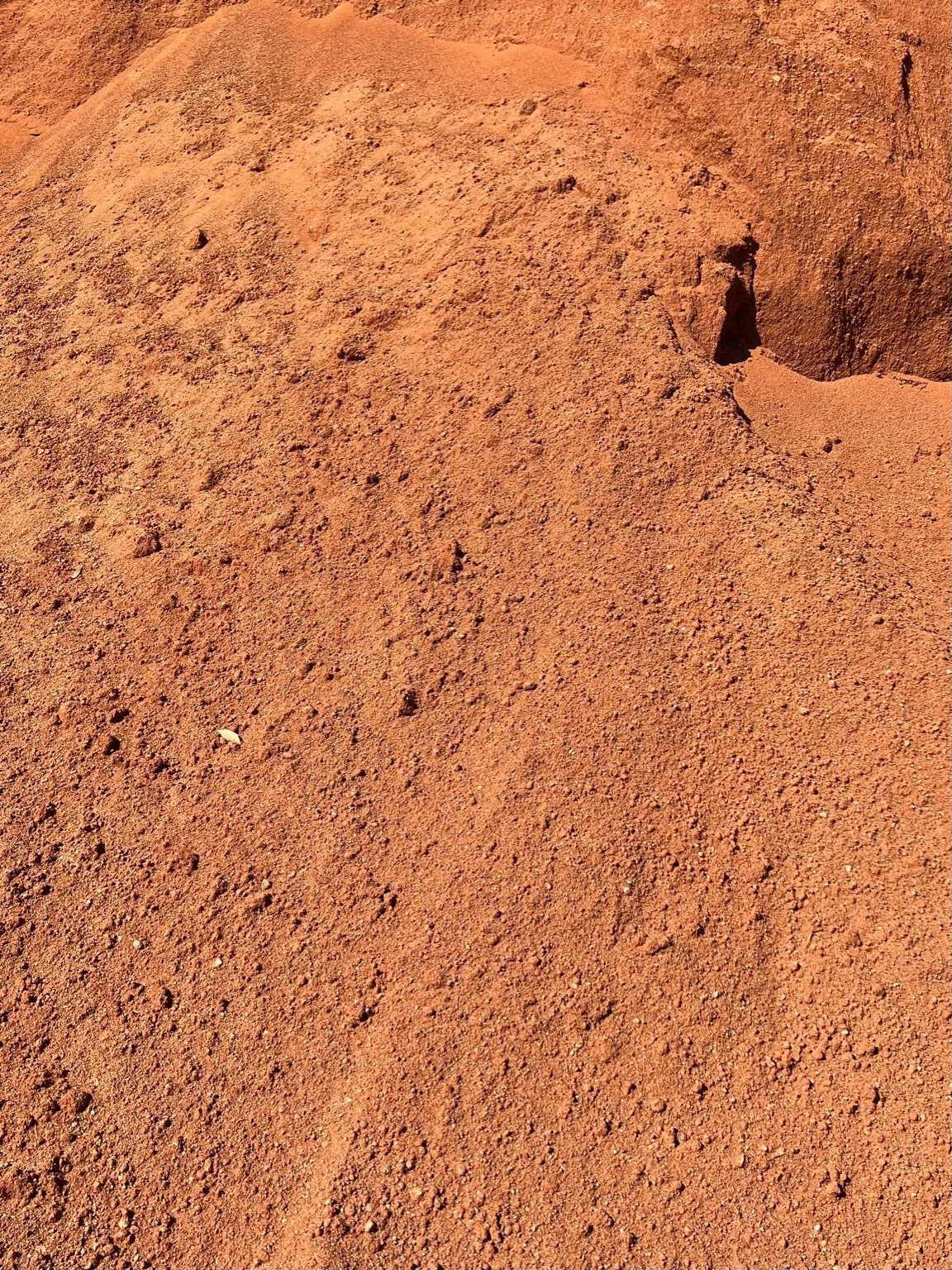
Product appearance may differ from photographs shown online. Masonry Sand is commonly used for masonry, landscaping, paver joints, play areas, and some above-ground pool base applications, but it is not a substitute for engineered base materials or structural aggregate products.
For pool liner or above-ground pool use, customers should follow the pool manufacturer’s or installer’s base preparation requirements and inspect the sand for debris, sharp particles, proper grading, and compaction before liner installation.
Tailgate spreading, when available, is intended to assist with material placement only and does not guarantee a finished, graded, or level surface.