 Image 1 of 2
 Image 2 of 2
Jump To
About | Common Uses | Coverage & Yield | FAQ | Disclaimer
How Much Washed White Masonry Sand Do I Need?
Calculator assumes Washed White Masonry Sand covers approximately 18 cubic feet per ton. Coverage estimates may vary based on moisture content, placement depth, compaction, settling, and site conditions.
Ordering note: Washed White Masonry Sand is sold in 15–20 ton truckload quantities only.
Sales tax varies by county and is added at checkout.
Truck delivery count is an estimate based on approximately 20 tons per delivery. Washed White Masonry Sand is sold in 15–20 ton truckload quantities only. Final load count may vary based on material type, truck capacity, legal weight limits, loading conditions, and scheduling.
About Washed White Masonry Sand
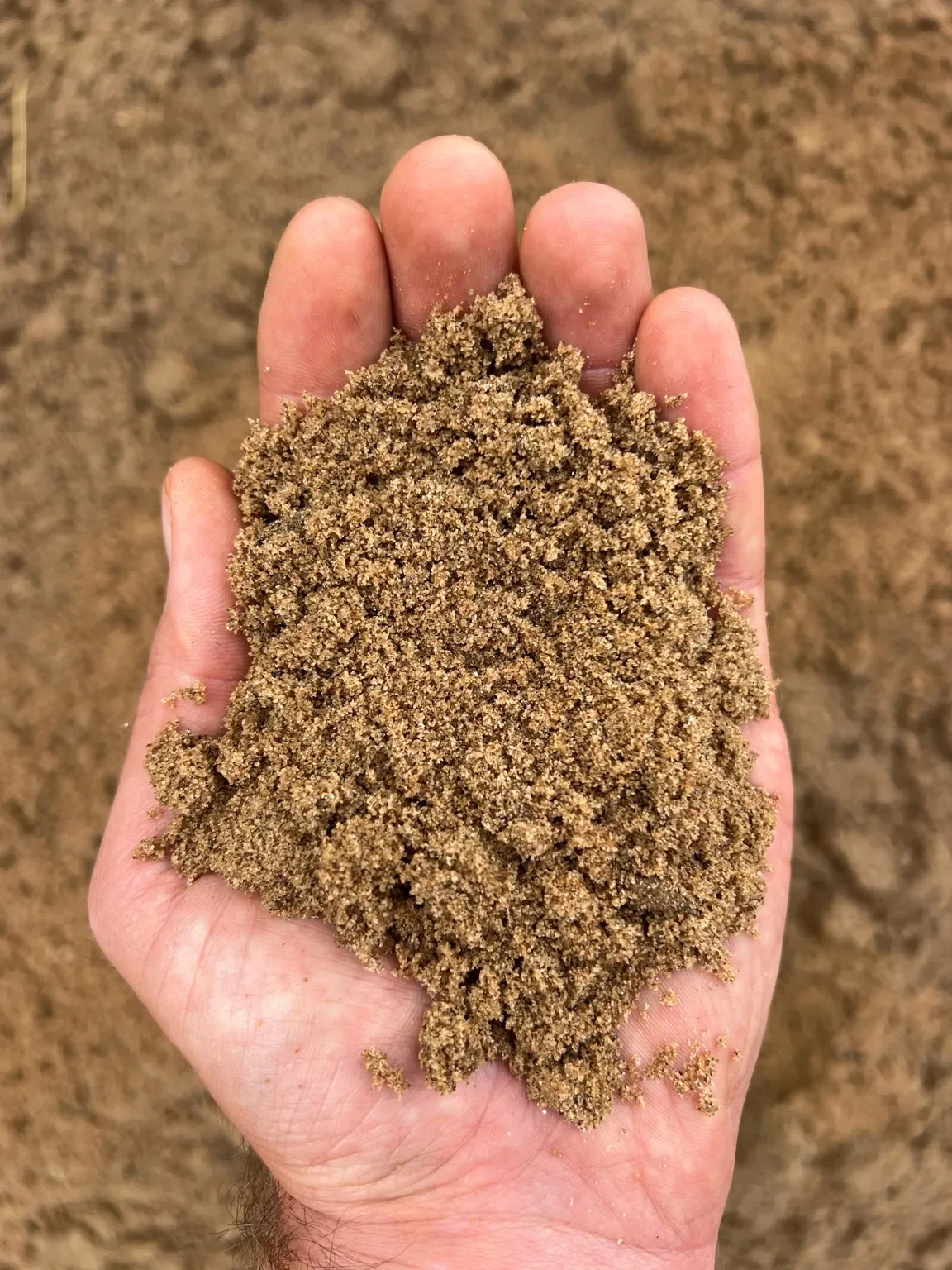
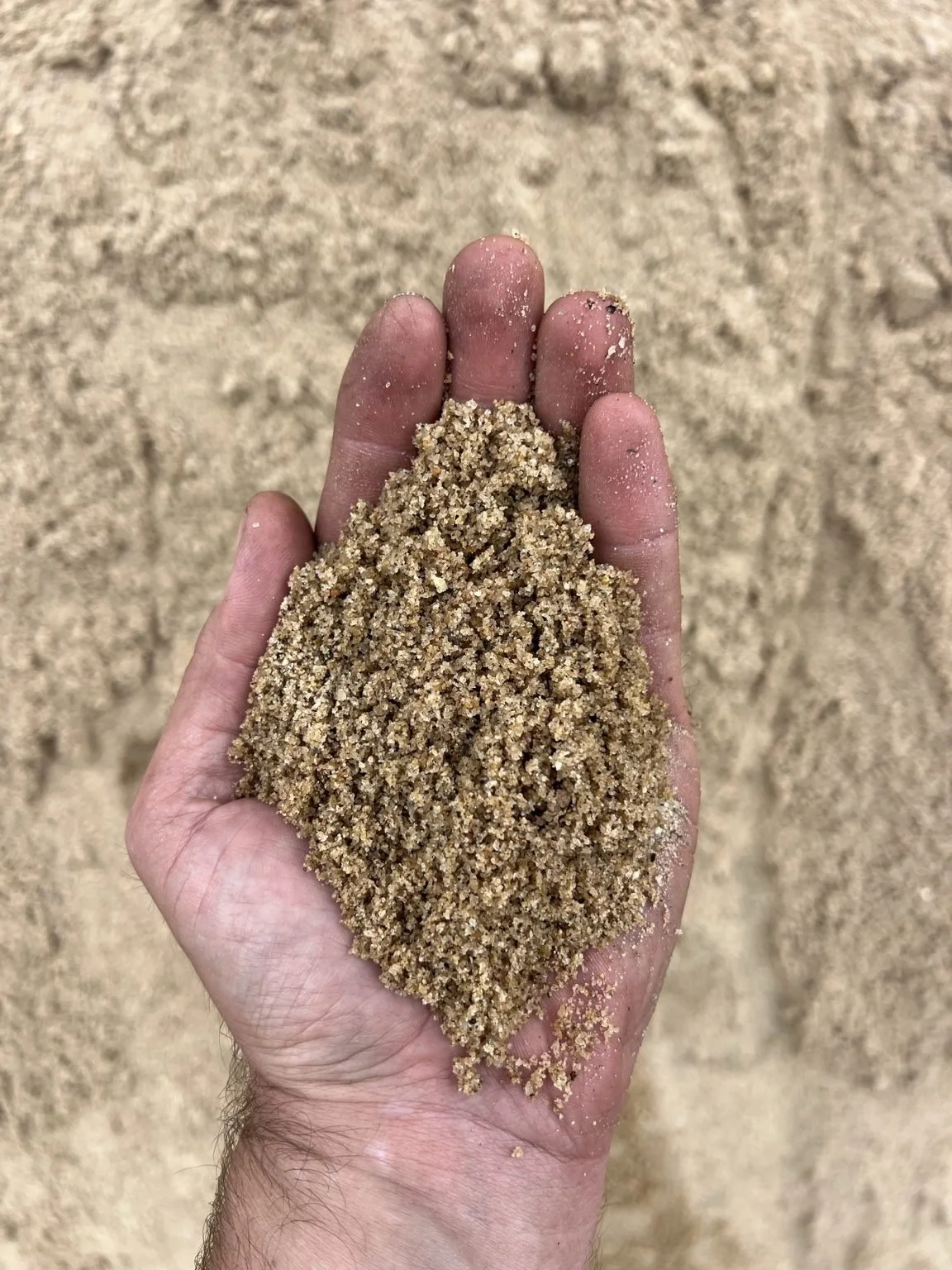
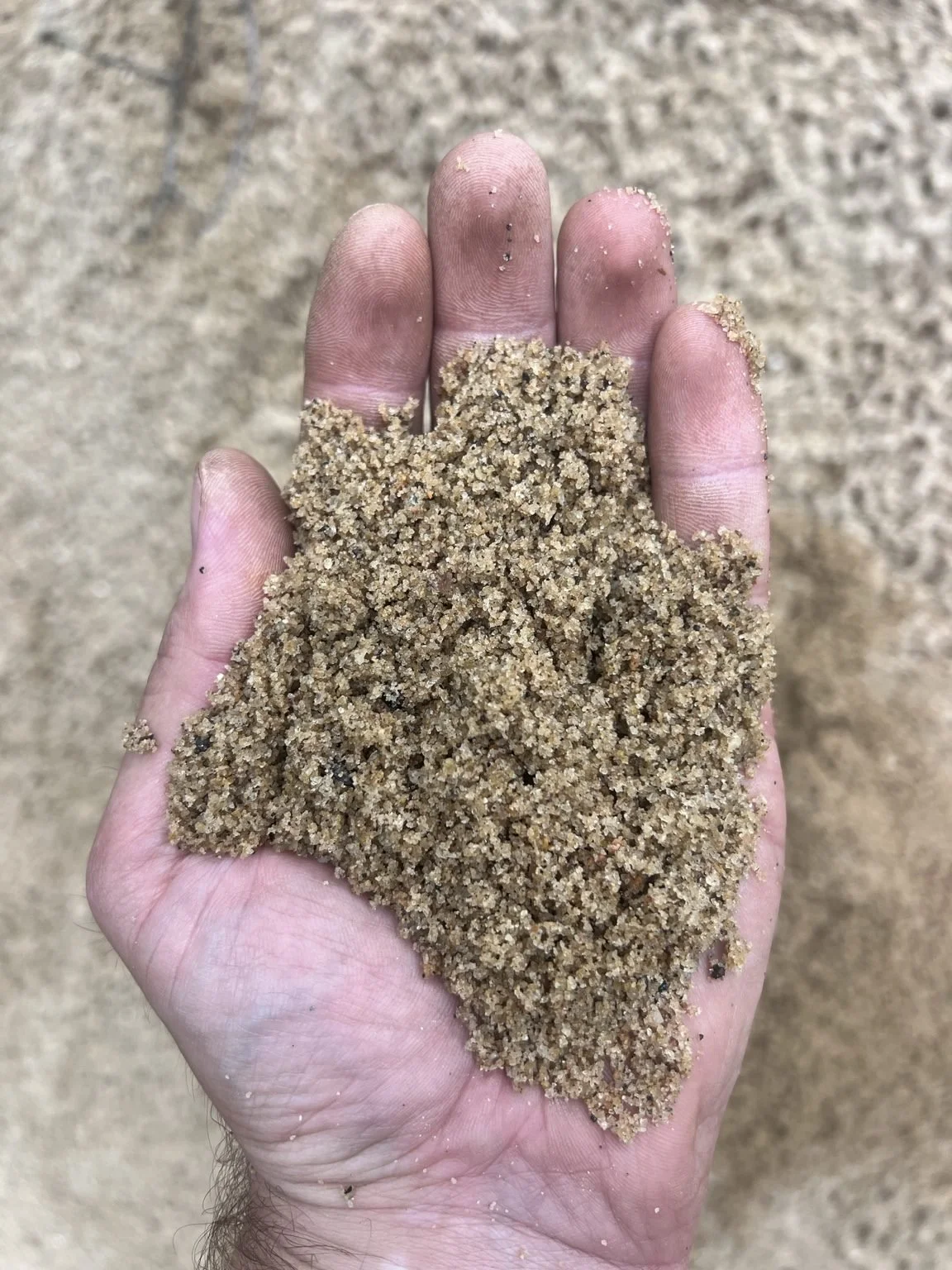
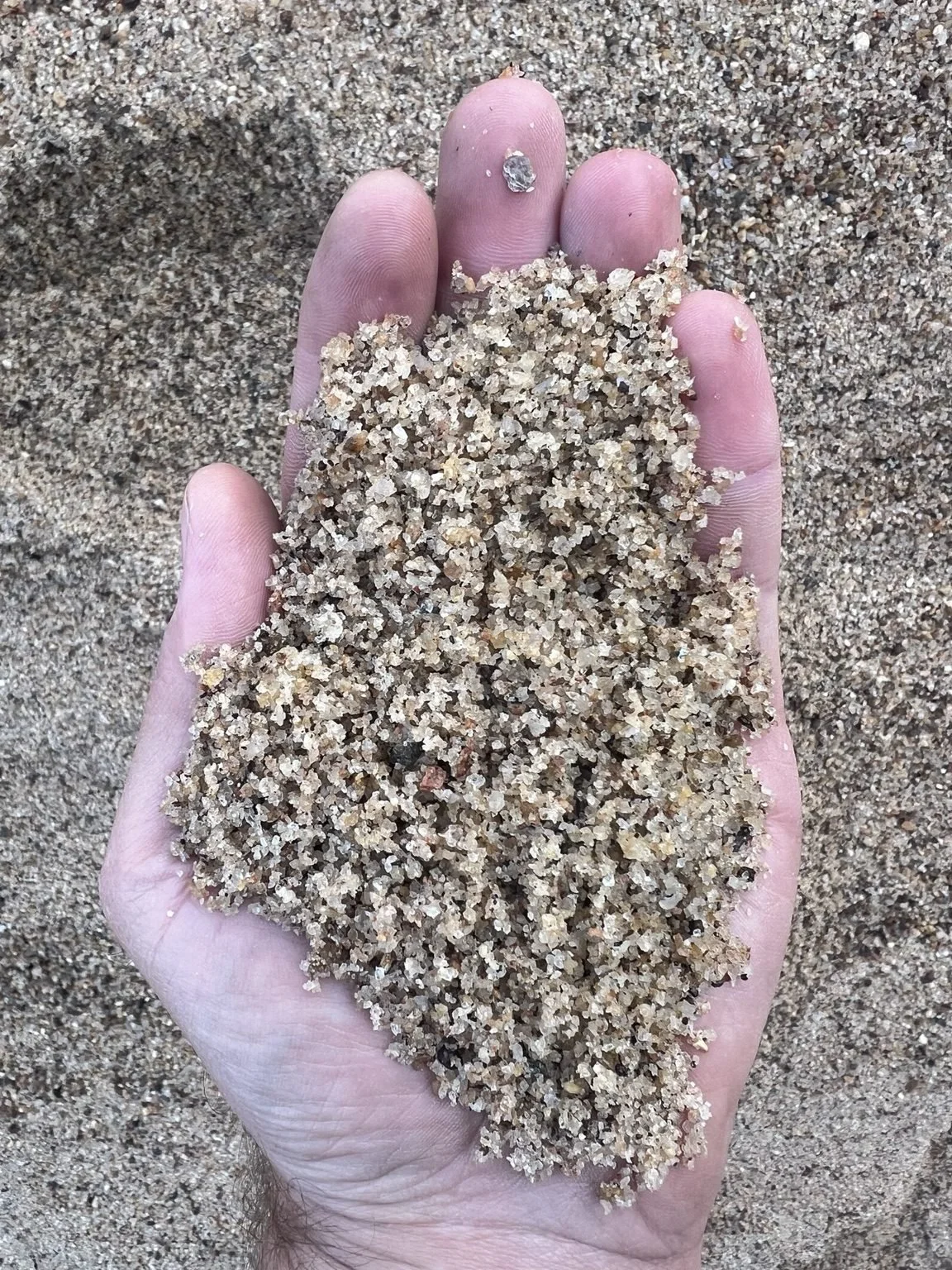
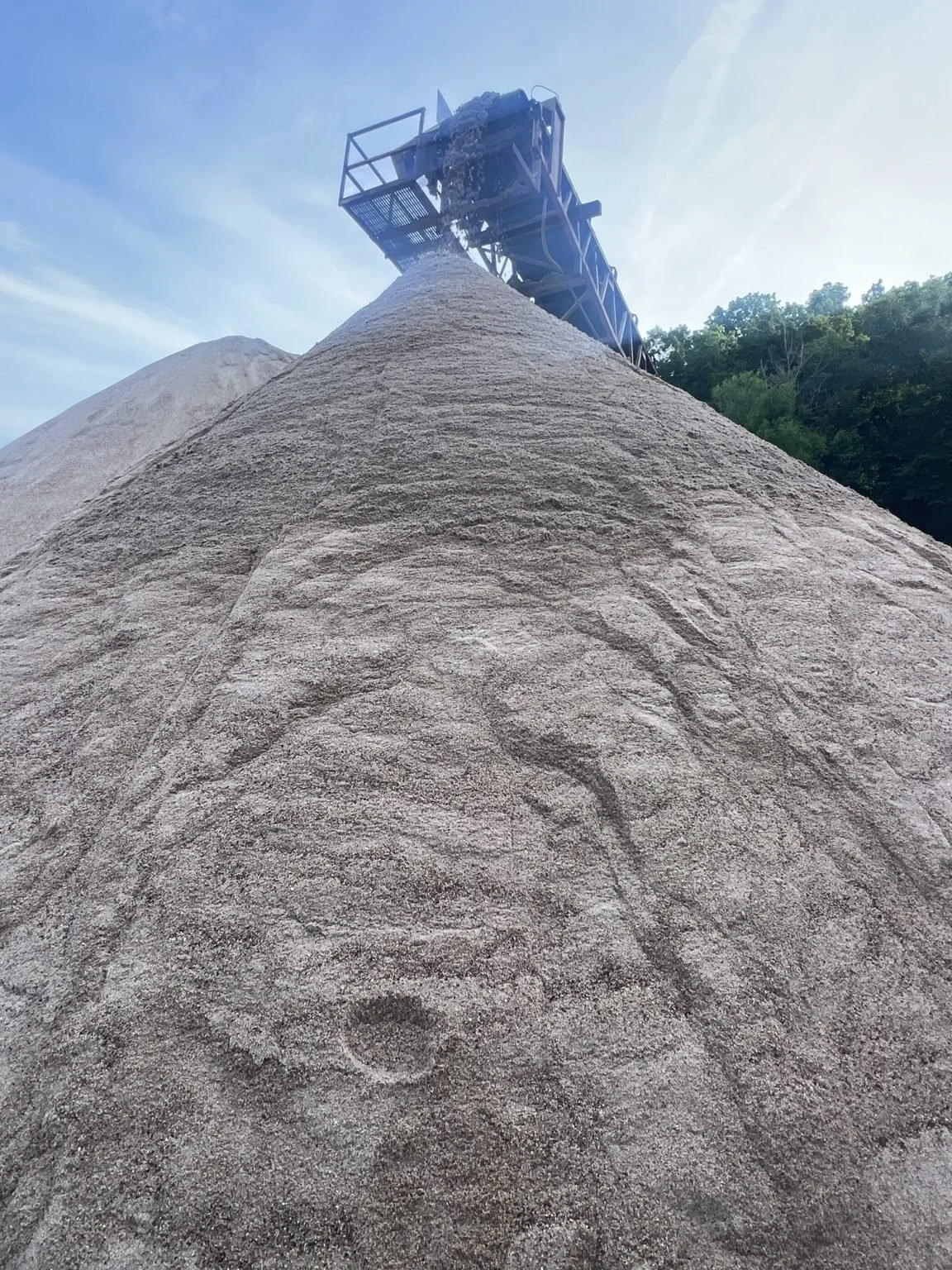
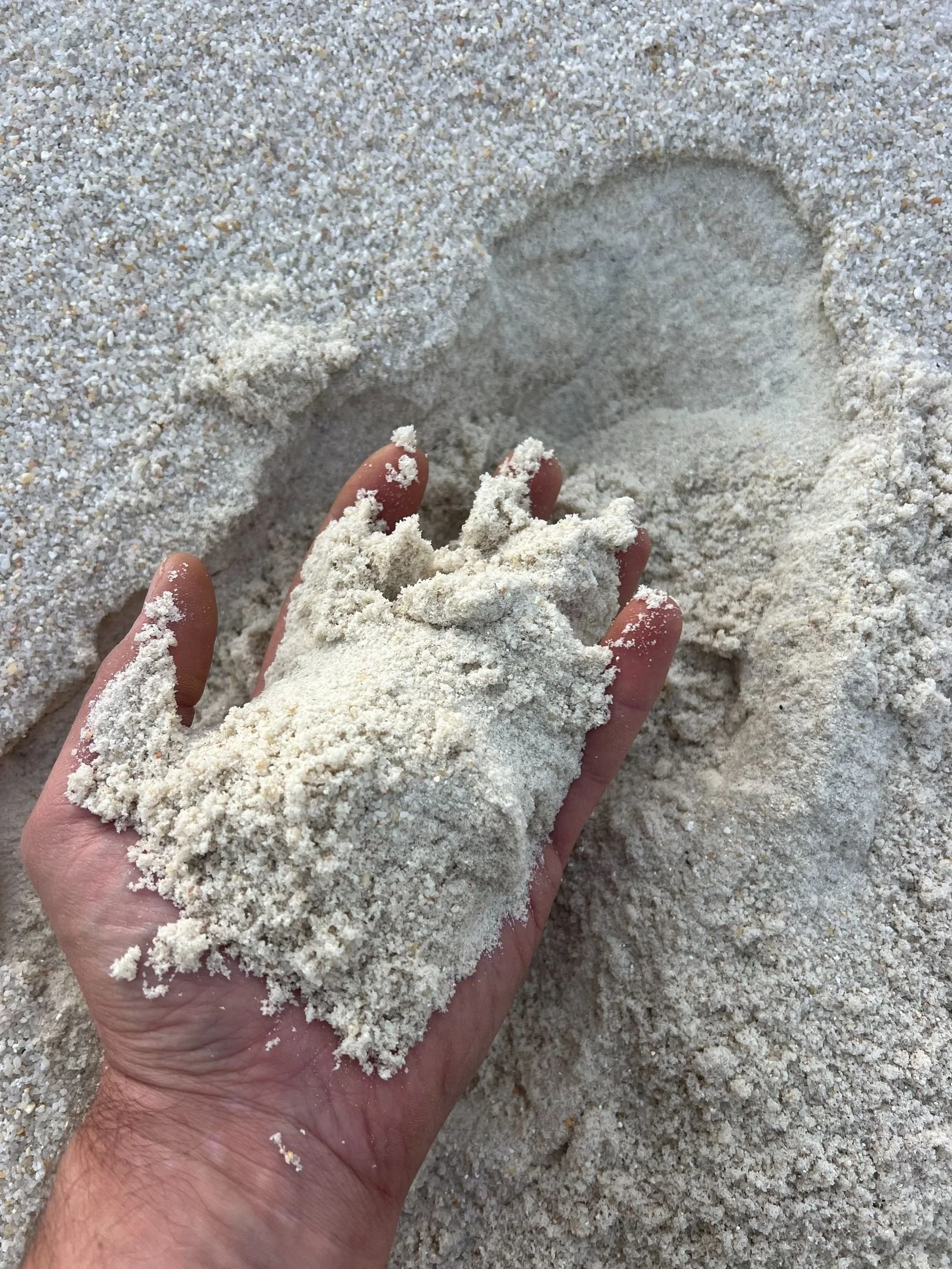
Washed White Masonry Sand, also known as White Mortar Sand, is a fine, washed natural sand commonly used for masonry, mortar, landscaping, and certain recreational applications throughout Upstate South Carolina.
The washing process removes much of the clay, silt, dust, and organic material found in unwashed sand products. This produces a cleaner and more consistent sand with a fine texture suitable for many masonry and finishing applications.
Washed White Masonry Sand is commonly used as the sand component in mortar mixes for brick, block, and stonework. Its fine texture also makes it useful for paver joints, landscaping projects, volleyball courts, animal enclosures, and certain recreational areas.
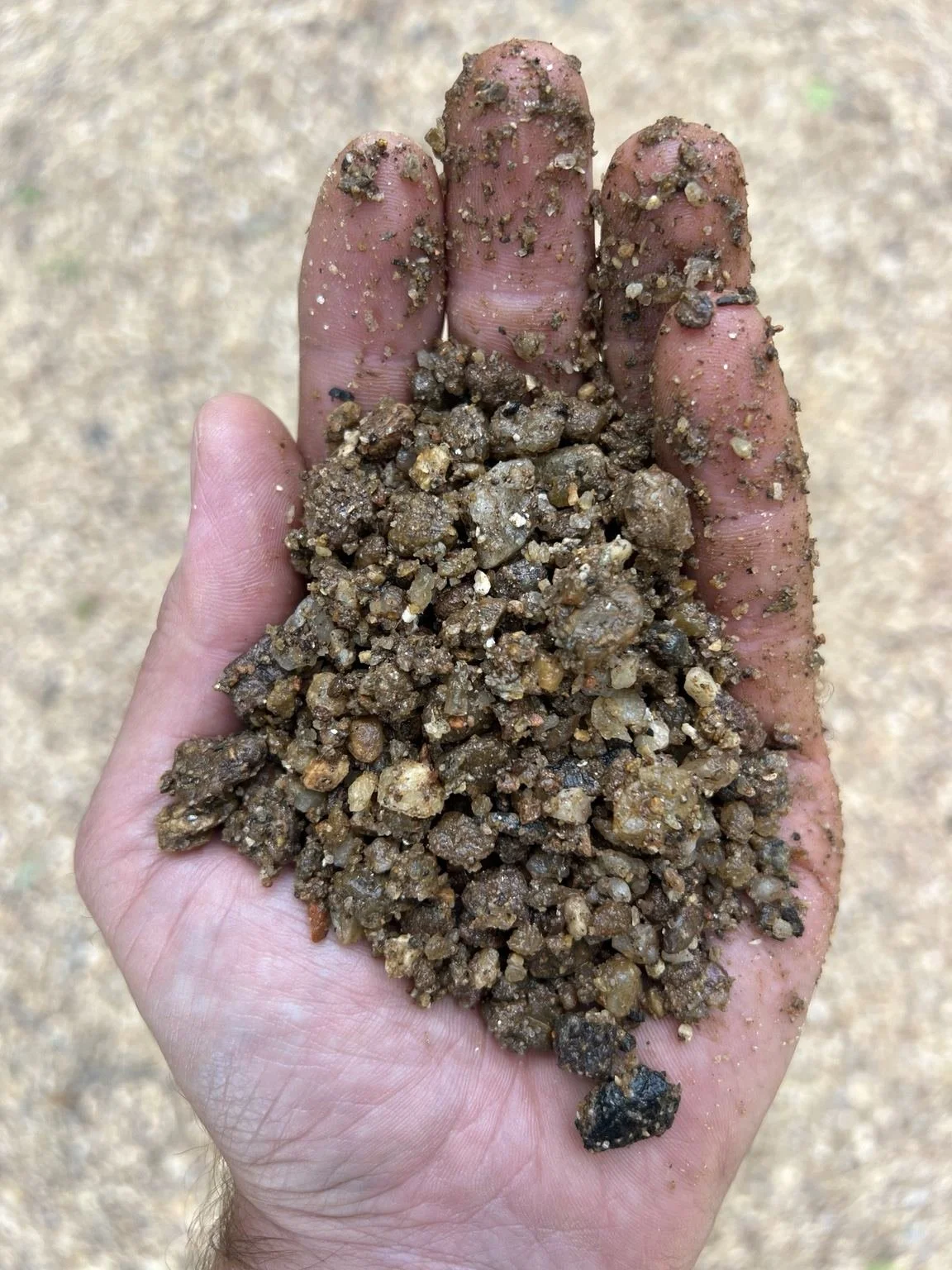
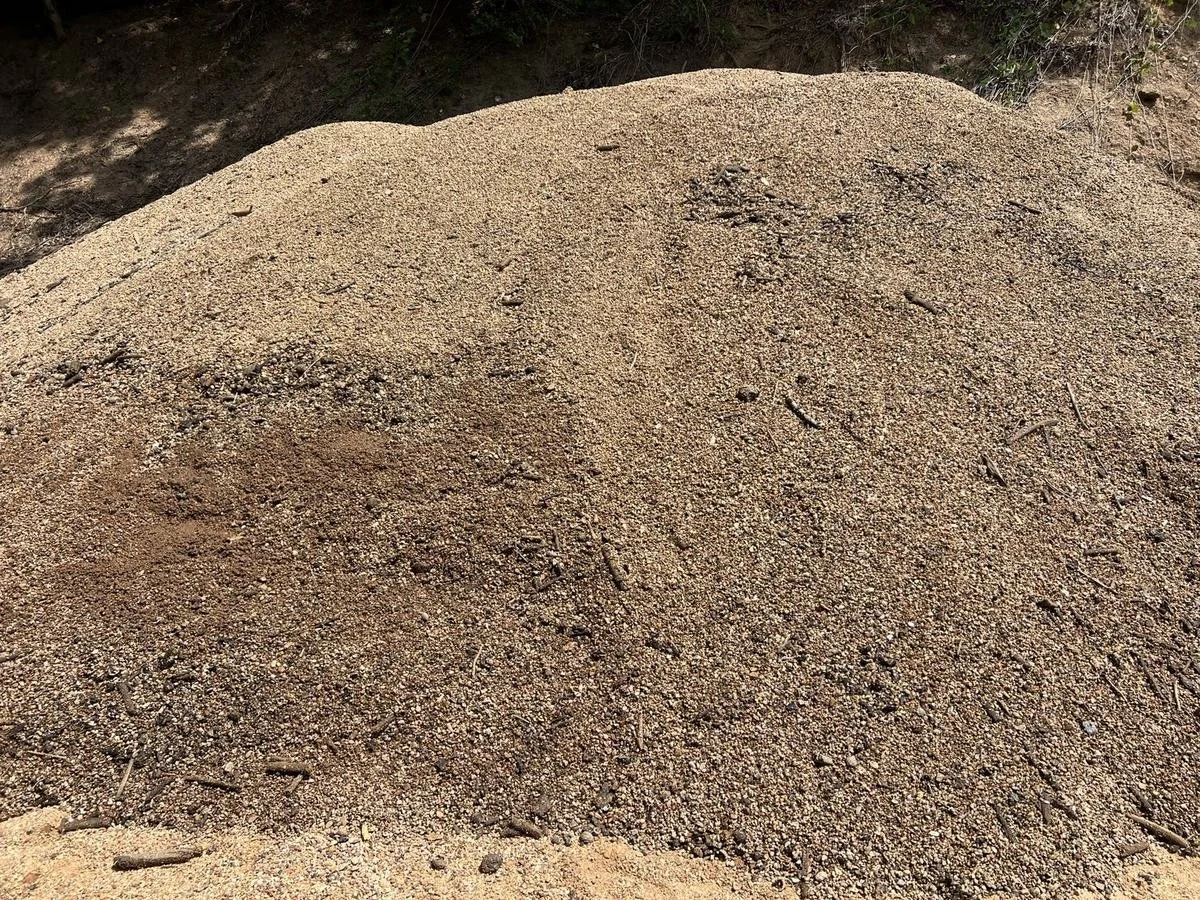
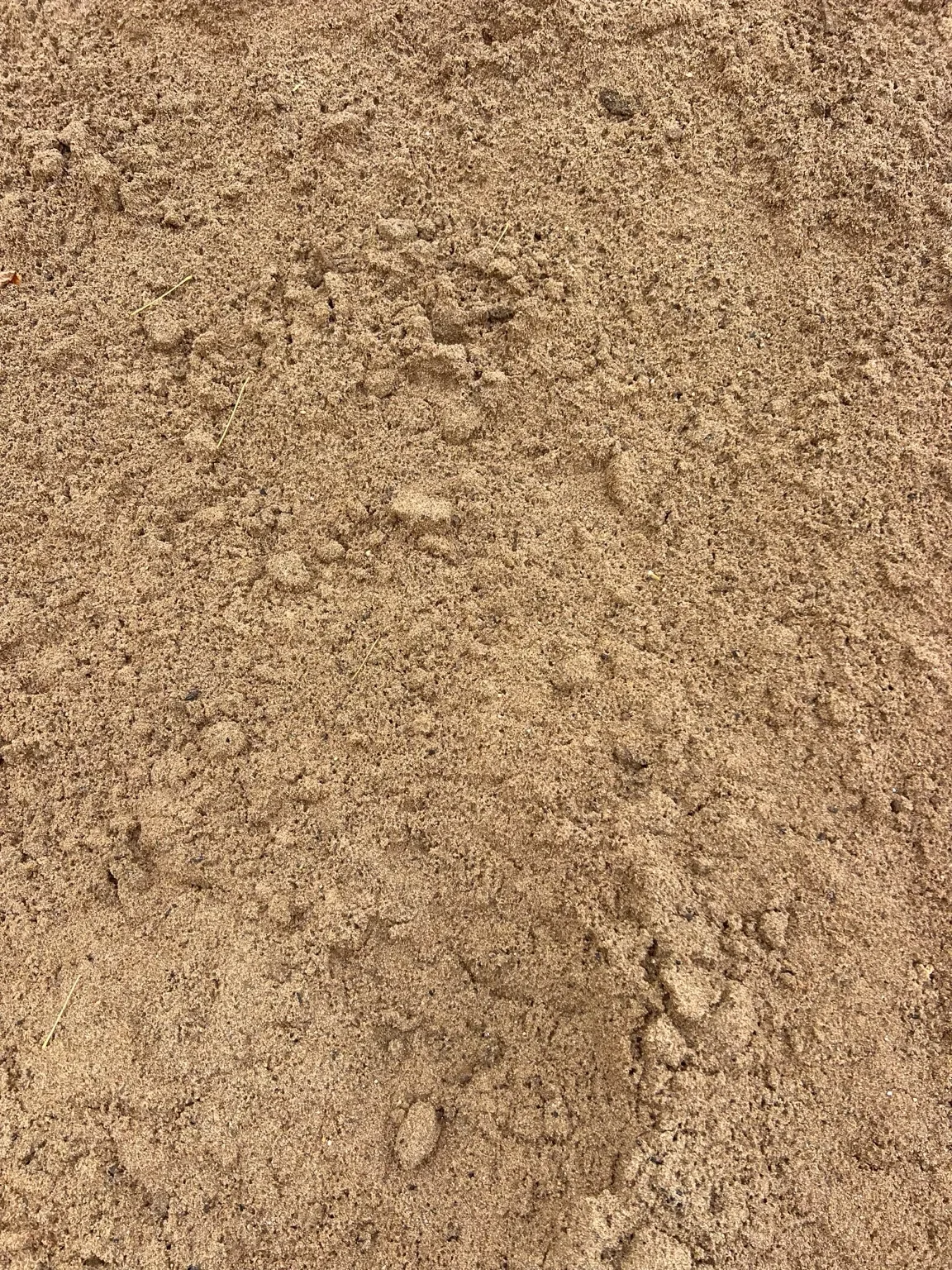
Despite the name, White Masonry Sand is not always pure or bright white. Its natural color may range from off-white and cream to light tan. Wet sand may also appear darker than dry sand.
White Masonry Sand and packaged Play Sand can have a similar fine texture, but they are not automatically the same product. White Masonry Sand is primarily produced for mortar and masonry applications and is not represented as sterilized, certified, or specifically tested as packaged Play Sand.
As a natural aggregate product, color, texture, moisture content, particle size, and appearance may vary between loads and source locations.
Palmetto Sand and Gravel delivers Fill Sand throughout Spartanburg, Greenville, Cherokee, Laurens, and Union Counties in Upstate South Carolina.
Common Uses in Upstate South Carolina
Mortar Mixes
Washed White Masonry Sand is commonly used as the fine aggregate component in mortar mixes for brick, block, stone, and related masonry projects.
The finished mortar color and performance also depend on the cement, lime, pigments, water content, mixing method, and project specifications.
Brick and Block Work
The fine, smooth texture makes White Masonry Sand a common choice for bricklaying and concrete block construction.
Customers should follow the mortar recipe, contractor recommendations, and applicable project specifications.
Stonework
White Masonry Sand may be used in mortar mixes for natural stone, manufactured stone, and other masonry installations.
The selected mortar mix should be appropriate for the stone type, installation method, and structural requirements.
Paver Joints
The material may be swept between pavers, bricks, and certain stone surfaces.
It is not the same as polymeric sand and does not contain binding additives designed to harden or resist washout.
Volleyball Courts
White Masonry Sand is sometimes selected for volleyball courts because of its relatively fine texture and lighter natural color.
Customers should inspect the material and determine whether its texture, cleanliness, depth, and drainage characteristics meet the requirements of the intended court.
Play and Recreational Areas
Some customers use White Masonry Sand in sandboxes and other recreational areas because of its fine texture.
However, it is not automatically the same as packaged Play Sand and is not represented as sterilized, certified, or specifically tested for children’s play areas. Customers should determine whether it is appropriate for their intended application.
Landscaping Projects
The sand may be used in decorative and functional landscape applications, including leveling, filling, edging, and selected surface treatments.
Because the material is fine and lightweight when dry, wind, runoff, and foot traffic may cause movement.
Animal Enclosures
Some customers use White Masonry Sand in chicken coops, dog pens, runs, and other animal areas.
Suitability depends on the animal, enclosure design, drainage, sanitation requirements, dust conditions, and maintenance practices.
Coverage & Yield
Calculator Assumption: Approximately 22 cubic feet per ton
Approximate Coverage at 2 Inches: About 132 square feet per ton
Approximate Coverage at 3 Inches: About 88 square feet per ton
Approximate Coverage at 4 Inches: About 66 square feet per ton
Note: Coverage and yield estimates are approximate. Actual results may vary based on moisture content, compaction, settlement, placement depth, site preparation, surface irregularities, and field conditions.
FAQ
What is Washed White Masonry Sand?
Washed White Masonry Sand is a fine, washed natural sand commonly used for mortar, masonry, landscaping, paver joints, and certain recreational applications.
Is White Masonry Sand the same as White Mortar Sand?
Yes. White Masonry Sand and White Mortar Sand are commonly used names for the same general type of material.
Names and exact specifications may vary by supplier and source location.
Is White Mortar Sand the same as Play Sand?
Not necessarily. White Mortar Sand and Play Sand may have a similar fine texture, but White Mortar Sand is primarily produced for mortar, brickwork, blockwork, and other masonry applications.
Some customers also use it in sandboxes and recreational areas, but it is not represented as sterilized, certified, or specifically tested as packaged Play Sand. Customers should determine whether the material is appropriate for their specific play-area requirements.
What is Washed White Masonry Sand used for?
Common uses include mortar mixes, brickwork, blockwork, stonework, paver joints, volleyball courts, landscaping projects, certain recreational areas, and animal enclosures.
How is White Masonry Sand different from regular Masonry Sand?
Both products are fine sands commonly used for mortar and masonry work.
White Masonry Sand generally has a lighter off-white or light-tan appearance, while regular Masonry Sand may have a darker tan, orange, brown, or gray color depending on its source.
How is Washed White Masonry Sand different from River Sand?
Washed White Masonry Sand is generally finer and smoother than River Sand.
River Sand is usually coarser and is commonly selected for concrete-related work, drainage-related applications, leveling, and general construction uses.
Is White Masonry Sand always bright white?
No. Despite the name, its natural color may range from off-white and cream to light tan.
Moisture can make the sand appear darker, and color may vary between source locations and loads.
Is White Masonry Sand washed?
Yes. The washing process removes much of the clay, silt, dust, and organic material found in unwashed sand.
Minor natural fines and variations may still remain.
Is White Masonry Sand screened?
Processing may include washing and sizing, but exact particle distribution may vary by source.
The material should not be assumed to meet a specific sieve analysis or project specification unless supporting documentation is provided.
Can Washed White Masonry Sand be used for mortar?
Yes. It is commonly used as the sand component in mortar mixes for brick, block, stone, and related masonry projects.
Customers should follow the appropriate mortar recipe and project requirements.
Will White Masonry Sand make white mortar?
Not by itself. The final mortar color depends on the sand, cement, lime, pigments, water content, curing conditions, and mixing proportions.
White Masonry Sand may contribute to a lighter appearance, but it does not guarantee white mortar.
Can Washed White Masonry Sand be used for paver joints?
Yes. It may be swept between pavers, bricks, and certain stone surfaces.
However, it is not polymeric sand and does not contain binding additives designed to lock the joints together.
Can White Masonry Sand be used beneath pavers?
It may be used as a thin leveling or bedding layer in some paver installations.
Customers should follow the paver manufacturer’s installation instructions and project specifications because base and bedding requirements vary.
Can Washed White Masonry Sand be used in play areas?
Some customers use it in sandboxes and recreational areas because of its fine texture.
However, it is not automatically the same as packaged Play Sand and is not represented as sterilized, certified, or specifically tested for play-area use.
Can Washed White Masonry Sand be used for volleyball courts?
Yes. It is sometimes used for volleyball courts because of its fine texture.
Customers should confirm that the particle size, softness, drainage, cleanliness, and installation depth are appropriate for the intended court.
Can White Masonry Sand be used in chicken coops?
Some customers use it in chicken coops and runs because it can be raked and cleaned.
Suitability depends on drainage, dust, sanitation, enclosure design, and animal-care practices.
Can White Masonry Sand be used in dog pens?
It may be used in certain dog pens and animal enclosures.
Customers should consider drainage, temperature, dust, sanitation, digging, and maintenance before selecting sand for an animal area.
Does White Masonry Sand drain well?
Sand generally allows water movement, but drainage performance depends on the underlying soil, installation depth, compaction, slope, and outlet conditions.
Fine sand may hold more moisture and drain more slowly than coarser River Sand or clean #57 stone.
Does White Masonry Sand compact?
It may settle and become firmer under moisture, traffic, or mechanical compaction, but it does not compact like Crusher Run or other aggregate containing stone and fines.
How much does one ton of White Masonry Sand cover?
Using the calculator assumption of approximately 22 cubic feet per ton, one ton provides approximate coverage of:
132 square feet at 2 inches deep
88 square feet at 3 inches deep
66 square feet at 4 inches deep
Actual coverage varies based on moisture content, settlement, compaction, placement, and site conditions.
How much does a full truckload of Washed White Masonry Sand cost?
A typical full truckload is approximately 20 tons. At $70 per ton, a 20-ton truckload costs approximately $1,400 before sales tax. Final cost may vary based on the actual delivered weight, legal weight limits, moisture content, and loading conditions.
What is the minimum order quantity?
Washed White Masonry Sand Fill Sand is sold in approximately 15–20 ton truckload quantities.
The exact delivered weight may vary based on moisture content, loading conditions, truck capacity, legal weight limits, and material availability.
How many tons can one truck deliver?
A typical full tri-axle load is around 20 tons, depending on moisture content, truck capacity, loading conditions, and legal weight limits.
Larger orders may require multiple deliveries.
Can Washed White Masonry Sand be tailgate spread?
Tailgate spreading may be available when site conditions allow. Final determination is made by the driver at delivery. Tailgate spreading helps distribute material during unloading, but it does not guarantee a finished, graded, or level surface. Additional grading, raking, or site work may be required.
Does moisture affect the delivered sand?
Yes. Sand can retain moisture, which may affect its appearance, handling, weight, and volume.
Wet sand may appear darker and may clump or spread differently than dry sand.
Do I need to be present for delivery?
You may not need to be present if clear unloading instructions have been provided and the delivery area is safe and accessible.
The driver makes the final determination regarding truck access, unloading location, and tailgate spreading at delivery.
How is Washed White Masonry Sand delivered?
Washed White Masonry Sand is sold by the ton and delivered by tri-axle dump truck.
Customers receive a 30-minute courtesy text before arrival.
Where does Palmetto Sand and Gravel LLC deliver White Masonry Sand?
Palmetto Sand and Gravel LLC delivers Washed White Masonry Sand throughout Spartanburg, Greenville, Cherokee, Laurens, and Union Counties in Upstate South Carolina.
Disclaimer
Washed White Masonry Sand is a natural aggregate product. Its color, texture, moisture content, particle size, fines content, and appearance may vary between loads and source locations.
Despite the name, White Masonry Sand may range from off-white and cream to light tan. Wet material may appear darker than dry material, and the product’s appearance may differ from photographs shown online.
The washing process removes much of the clay, silt, dust, and organic material commonly found in unwashed sand, but it does not guarantee that the material is completely free of all natural fines, organic matter, small stones, or other naturally occurring variation.
White Masonry Sand is primarily produced and sold for masonry, mortar, landscaping, and general sand applications. It is not represented as sterilized, certified, sanitized, silica-free, or specifically tested as packaged Play Sand.
Customers using the material in sandboxes, play areas, volleyball courts, animal enclosures, or other recreational applications should inspect the material and determine whether it is suitable for the intended use.
The product is not represented as meeting any specific mortar, masonry, ASTM, engineered, governmental, recreational, playground, athletic, animal-care, or project specification unless supporting documentation is provided separately.
Coverage and yield estimates are approximate and provided for planning purposes only. Actual coverage, volume, settlement, and placement depth may vary based on moisture content, compaction, placement method, site preparation, surface irregularities, and field conditions.
Tailgate spreading may be available when site conditions allow. Final determination is made by the driver at delivery. Tailgate spreading helps distribute material during unloading, but it does not guarantee a finished, graded, or level surface. Additional grading, raking, or site work may be required