 Image 1 of 3
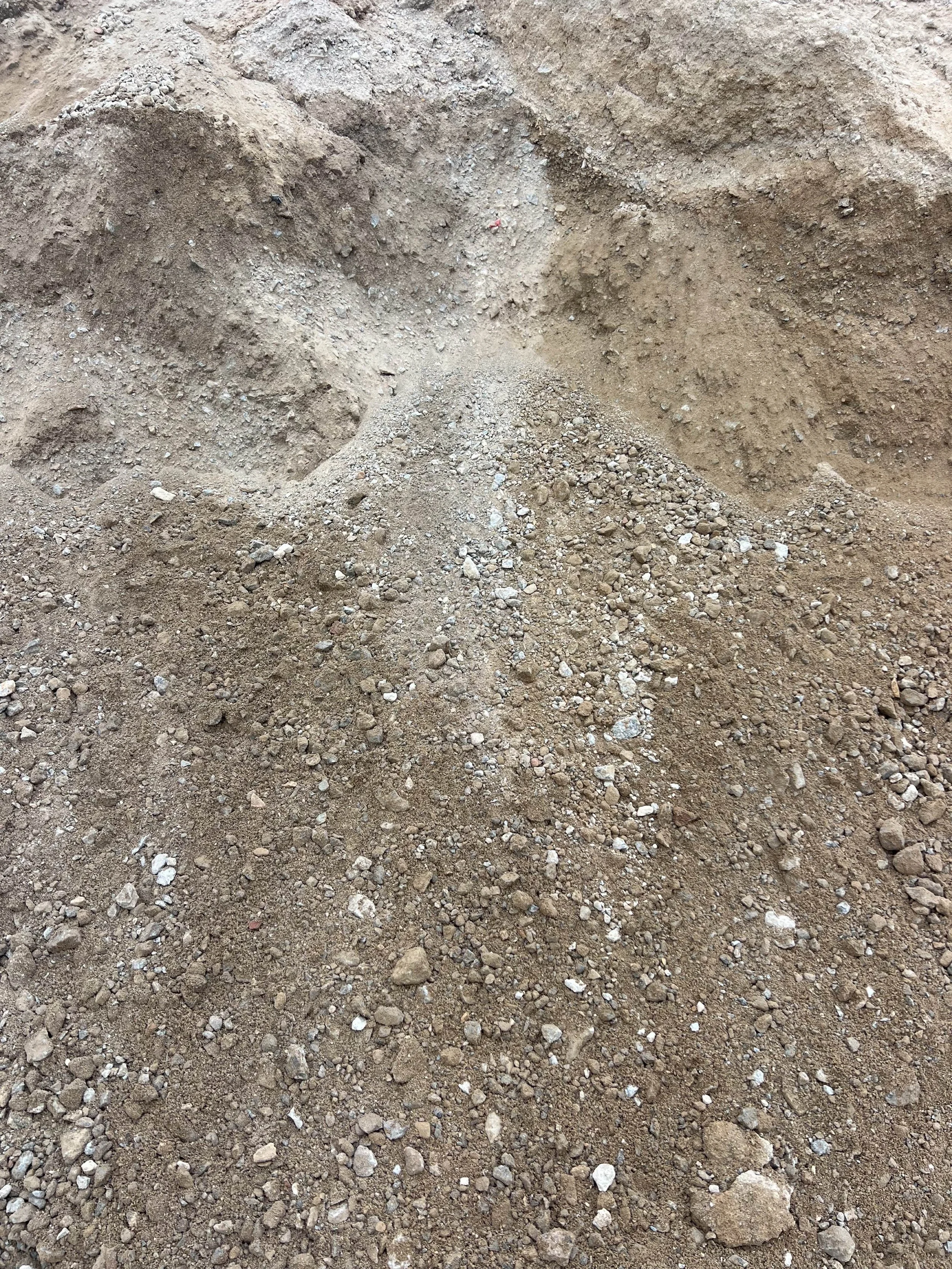 Image 2 of 3
 Image 3 of 3
Jump To
About | Common Uses | Coverage & Yield | FAQ | Disclaimer
How Much Recycled Crusher Run Do I Need?
Calculator assumes Recycled Crusher Run covers approximately 22 cubic feet per ton. Coverage estimates are approximate and may vary based on moisture content, grading, placement depth, and compaction.
Sales tax varies by county and is added at checkout.
Truck delivery count is an estimate based on approximately 20 tons per delivery. Final load count may vary based on material type, truck capacity, legal weight limits, loading conditions, and scheduling.
About Recycled Crusher Run
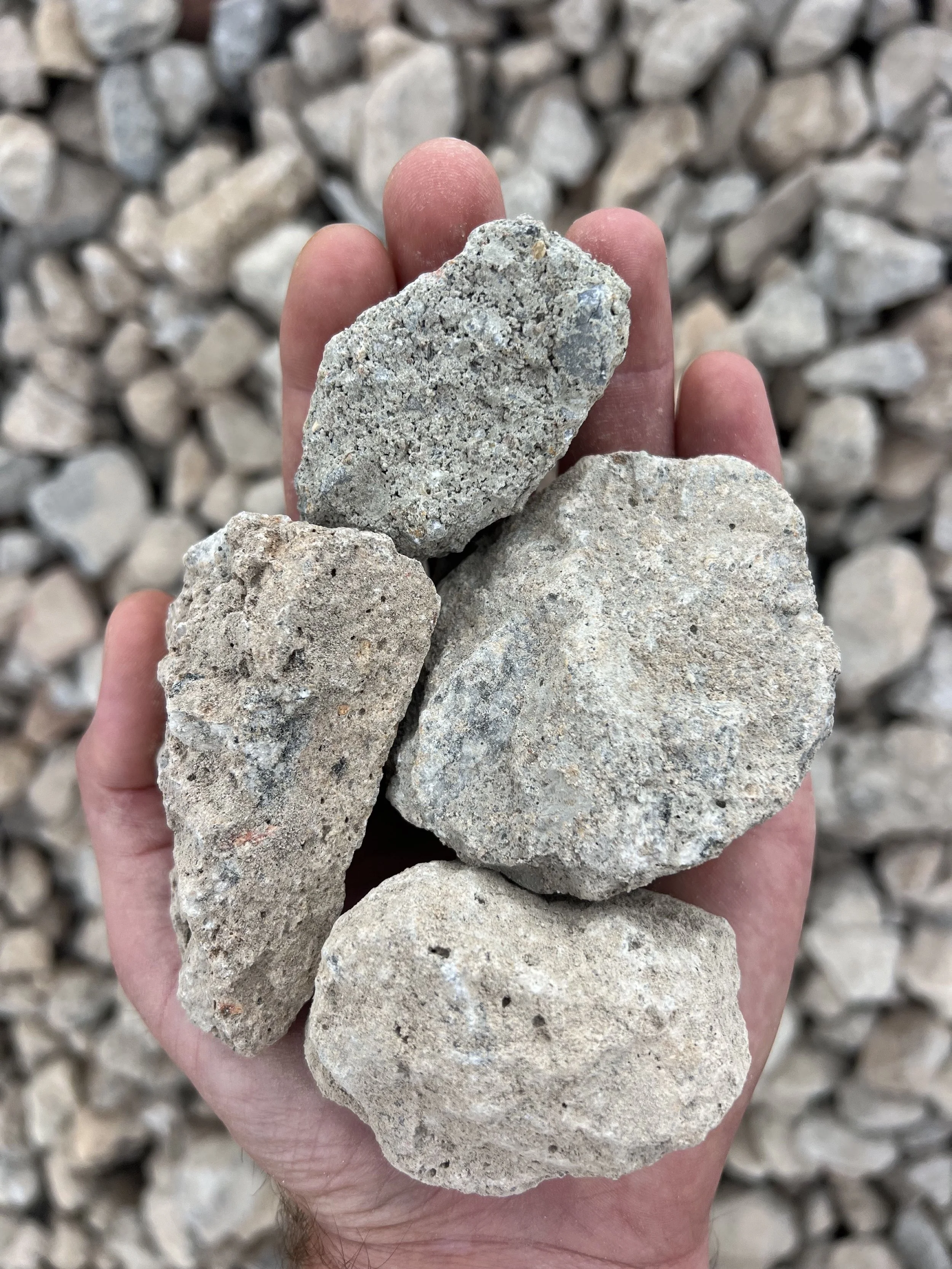
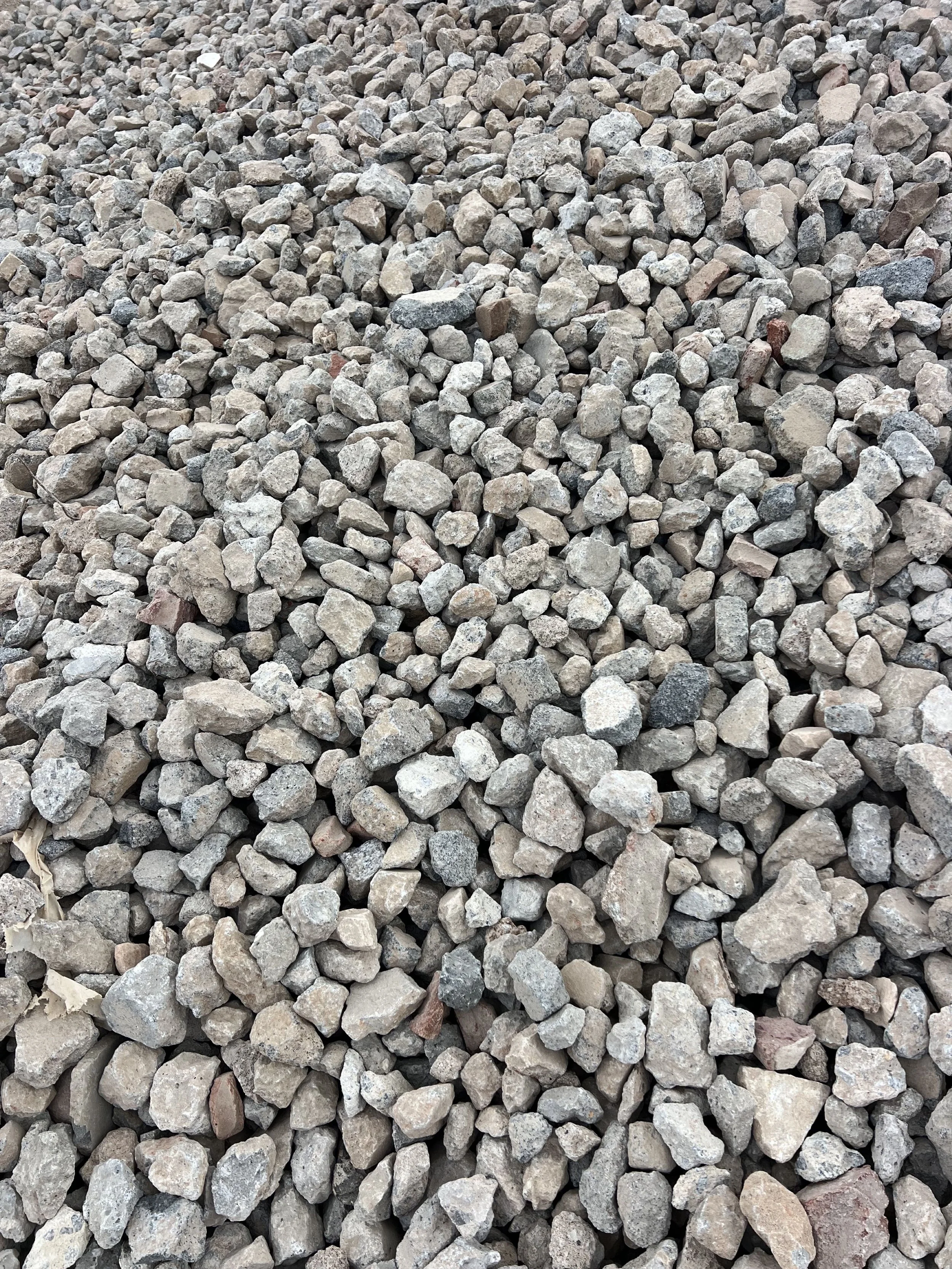
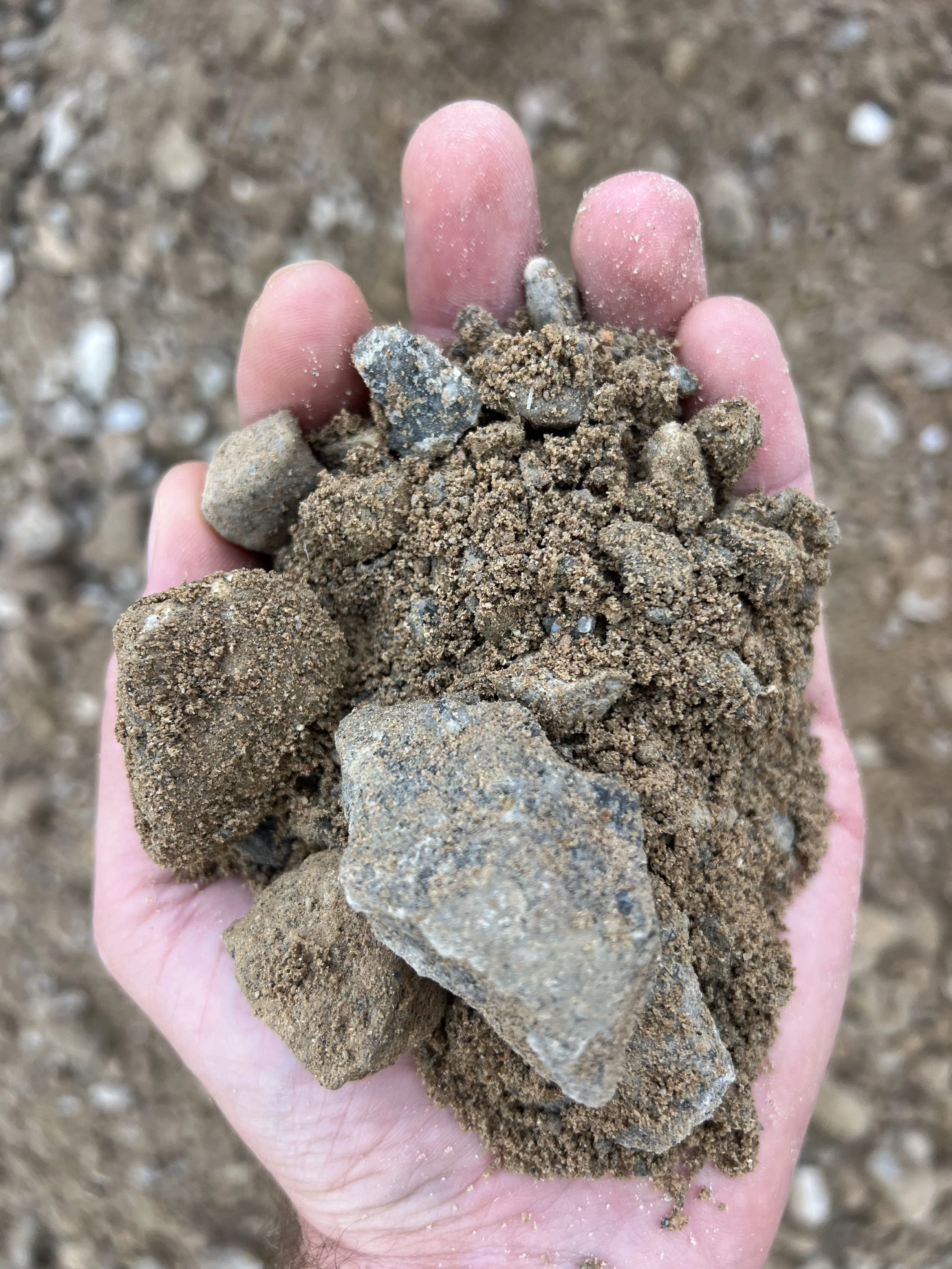
Recycled Crusher Run is a compactable aggregate produced by crushing and processing reclaimed construction materials into a blend of larger aggregate particles and fines.
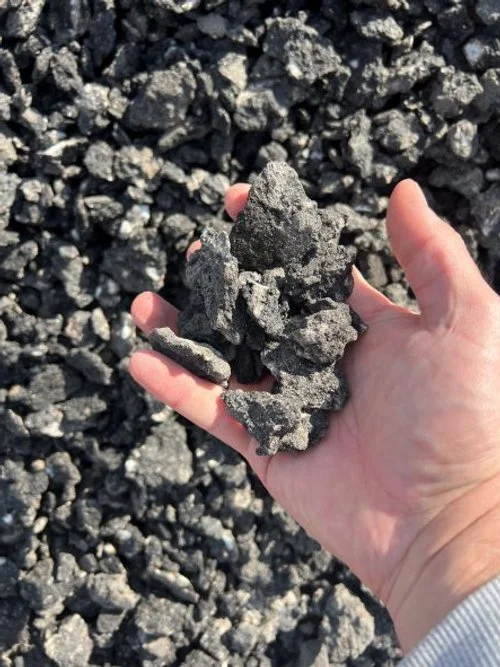
The material typically contains crushed concrete, asphalt, stone, brick, and similar reclaimed aggregate products. The combination of angular particles and fines allows the material to settle and compact into a firmer surface than clean, washed stone.
Recycled Crusher Run is commonly selected for driveways, access roads, parking areas, equipment pads, shed pads, and other projects where a compactable and economical aggregate base is needed.
Unlike virgin Crusher Run, which is manufactured from newly quarried granite, Recycled Crusher Run is produced from reclaimed materials. Its exact composition, color, texture, and appearance can therefore vary considerably between loads.
Customers may see gray, brown, black, tan, white, or mixed coloration depending on the concrete, asphalt, stone, and other materials included in the recycled source stockpile.
Although the material is processed and screened, occasional foreign material may remain. Small wire fragments, brick pieces, asphalt chunks, concrete fragments, and other reclaimed materials may be present. Customers should consider this when selecting material for areas where children, pets, livestock, bare feet, or frequent hand contact are expected.
Recycled Crusher Run may be used as a finished gravel surface or as a base beneath another aggregate or pavement layer. Proper site preparation, drainage, placement in manageable lifts, and mechanical compaction generally improve performance.
The material is delivered throughout Spartanburg, Greenville, Cherokee, Laurens, and Union Counties by Palmetto Sand and Gravel LLC.
Common Uses in Upstate South Carolina
Driveways
Recycled Crusher Run is commonly used as a compactable driveway surface or driveway base.
The mixture of aggregate and fines can form a firmer surface when installed over a properly prepared area and compacted with suitable equipment. Additional grading and maintenance may still be required over time.
Access Roads
The material is commonly used for private roads, farm roads, construction entrances, and temporary access routes.
For weak, wet, or unstable ground, larger aggregate such as Surge Stone may be needed beneath the Recycled Crusher Run to improve support.
Parking Areas
Recycled Crusher Run may be used for residential parking pads, contractor parking areas, overflow parking, and other compactable gravel surfaces.
Adequate drainage and regular maintenance help reduce potholes, rutting, washout, and standing water.
Equipment Pads and Yards
The material may be used for equipment storage areas, contractor yards, work areas, and other locations where a compactable aggregate surface is desired.
Suitability depends on ground conditions, drainage, equipment weight, traffic frequency, and installation depth.
Shed Pads
Recycled Crusher Run is commonly used beneath sheds, storage buildings, and similar non-habitable structures.
Customers should follow the shed manufacturer’s installation requirements, local building requirements, and any project-specific recommendations.
General Base Applications
Recycled Crusher Run may be used as a compactable base beneath gravel, asphalt, pavers, concrete-related construction, and other surface materials when appropriate for the project.
It is not represented as engineered fill or certified structural base material unless separate testing or documentation is specifically provided.
Temporary Construction Surfaces
The material is often used for temporary construction entrances, staging areas, and work surfaces because it provides a more stable surface than bare soil.
Heavy traffic, wet weather, and weak subgrade conditions may still cause rutting or displacement.
Repairing Gravel Areas
Recycled Crusher Run may be used to fill potholes, low spots, rutted areas, and washed-out sections of existing gravel surfaces.
For best results, damaged areas should be properly prepared before new material is placed and compacted.
Coverage & Yield
Calculator Assumption: Approximately 22 cubic feet per ton
Approximate Coverage at 2 Inches: About 132 square feet per ton
Approximate Coverage at 3 Inches: About 88 square feet per ton
Approximate Coverage at 4 Inches: About 66 square feet per ton
Approximate Coverage at 6 Inches: About 44 square feet per ton
Note: Coverage and yield estimates are approximate. Actual coverage may vary based on moisture content, particle-size distribution, fines content, compaction, settlement, site preparation, placement depth, and field conditions.
FAQ
What is Recycled Crusher Run?
Recycled Crusher Run is a compactable aggregate made by crushing and processing reclaimed construction materials such as concrete, asphalt, stone, brick, and fines.
What is Recycled Crusher Run made from?
It commonly contains crushed concrete, asphalt, stone, brick, and other reclaimed aggregate materials.
The exact mixture may vary between loads depending on the materials being processed.
What are the other names for Recycled Crusher Run?
It may also be called Recycled Crush and Run, Recycled ABC, Recycled Road Bond, recycled road base, or recycled concrete base.
Names and specifications may vary by supplier and region.
How is Recycled Crusher Run different from regular Crusher Run?
Regular Crusher Run is produced from newly quarried and crushed granite.
Recycled Crusher Run is made from reclaimed concrete, asphalt, stone, brick, and similar materials. It typically has greater variation in color, texture, and composition.
Does Recycled Crusher Run compact?
Yes. Its combination of angular aggregate and fines allows it to compact into a firmer surface than clean stone.
Compaction results depend on moisture content, installation depth, site preparation, equipment, and field conditions.
Can Recycled Crusher Run be used for driveways?
Yes. It is commonly used for driveways, access roads, parking areas, and similar compactable aggregate surfaces.
It may be used as the finished surface or as a base beneath another material.
Is Recycled Crusher Run good for muddy areas?
It may help improve some muddy areas, but results depend on the depth of the mud, drainage, soil strength, and traffic.
Very soft or unstable ground may require excavation, geotextile fabric, larger stone such as Surge Stone, or additional site preparation before Recycled Crusher Run is installed.
Does Recycled Crusher Run drain well?
Recycled Crusher Run is designed to compact, so it does not drain as freely as clean stone products such as #57 Stone.
Drainage should be directed away from the finished area through proper grading and site preparation.
What size is Recycled Crusher Run?
The material typically ranges from approximately 1½ inches down to fine particles.
Because it is recycled, size distribution and composition may vary between loads.
Does Recycled Crusher Run contain wire or debris?
It may. Small wire fragments, asphalt pieces, brick fragments, concrete pieces, stone, or other reclaimed materials may remain despite processing and screening.
The product should not be expected to have the same uniformity as newly quarried aggregate.
Is Recycled Crusher Run safe for playgrounds or areas where children play?
It is generally not recommended for playground surfaces or areas where children regularly play because occasional wire, concrete fragments, asphalt, brick, or other reclaimed material may be present.
A cleaner, purpose-specific surface material should be selected for those areas.
Is Recycled Crusher Run suitable around livestock or horses?
Customers should use caution because recycled aggregate may contain occasional wire fragments, sharp concrete edges, asphalt, brick, or other reclaimed material.
It is generally not recommended as direct footing in livestock pens, horse paddocks, arenas, or areas where animals frequently lie down or walk barefoot.
Can Recycled Crusher Run be used beneath a shed?
Yes. It is commonly used for shed pads and similar general base applications.
The finished pad should be properly graded, compacted, and constructed according to the shed manufacturer’s requirements.
Can Recycled Crusher Run be used beneath concrete?
It may be used in some general base applications, but concrete slabs, foundations, and structural projects may require specific aggregate, compaction, thickness, testing, or engineering requirements.
Customers should follow the project plans, contractor recommendations, and applicable specifications.
Can Recycled Crusher Run be used under asphalt?
It may be used as a base beneath asphalt when allowed by the project design or paving contractor.
Commercial, municipal, structural, or specification-controlled projects may require certified virgin aggregate instead.
Is Recycled Crusher Run considered engineered fill?
No. Palmetto Sand and Gravel LLC does not represent Recycled Crusher Run as engineered fill, certified structural fill, or material meeting a particular specification unless separate documentation is provided.
How much does one ton of Recycled Crusher Run cover?
Using the calculator assumption of approximately 22 cubic feet per ton, one ton covers approximately:
132 square feet at 2 inches deep
88 square feet at 3 inches deep
66 square feet at 4 inches deep
44 square feet at 6 inches deep
Actual coverage varies based on compaction, moisture content, settlement, placement, and site conditions.
How much does Recycled Crusher Run cost?
Recycled Crusher Run costs $50 per ton before delivery fees and sales tax.
Free delivery applies to qualifying orders of 15 tons or more within the standard service area.
How much does a full truckload of Recycled Crusher Run cost?
A typical full truckload is approximately 20 tons.
At $50 per ton, a 20-ton truckload costs approximately $1,000 before sales tax. Qualifying orders of 15 tons or more receive free delivery within Palmetto Sand and Gravel LLC’s standard service area.
Final cost may vary based on the actual quantity ordered or delivered, legal weight limits, truck capacity, and loading conditions.
What is the minimum order?
Recycled Crusher Run is sold by the ton and does not require a 15-ton minimum.
Delivery fees apply to smaller orders:
1–4 tons: $200
5–14 tons: $130
15 tons or more: Free delivery
Can Recycled Crusher Run be tailgate spread?
Tailgate spreading may be available when site conditions allow. Final determination is made by the driver at delivery.
Tailgate spreading helps distribute material during unloading, but it does not guarantee a finished, graded, or level surface. Additional grading, raking, compaction, or site work may be required.
Do I need to compact Recycled Crusher Run?
Mechanical compaction is generally recommended when a firm and stable surface is desired.
Simply driving over the material may provide limited compaction but may not produce the same result as proper grading, moisture conditioning, and compaction equipment.
Should Recycled Crusher Run be installed in layers?
For deeper installations, placing and compacting the material in manageable layers may improve compaction and reduce uneven settlement.
The appropriate lift thickness depends on the equipment, moisture content, project requirements, and site conditions.
Do I need to be present for delivery?
You may not need to be present if clear unloading instructions have been provided and the delivery area is safe and accessible.
The driver makes the final decision regarding truck access, unloading location, and tailgate spreading at delivery.
How is Recycled Crusher Run delivered?
Recycled Crusher Run is sold by the ton and delivered by tri-axle dump truck.
Customers receive a 30-minute courtesy text before arrival.
Where does Palmetto Sand and Gravel LLC deliver Recycled Crusher Run?
Palmetto Sand and Gravel LLC delivers Recycled Crusher Run throughout Spartanburg, Greenville, Cherokee, Laurens, and Union Counties in Upstate South Carolina.
Disclaimer
Recycled Crusher Run is a recycled aggregate product. Its color, texture, size distribution, fines content, composition, and overall appearance may vary substantially between loads and source locations.
The material may contain crushed concrete, asphalt, stone, brick, fines, and other reclaimed construction materials. Occasional wire fragments, metal pieces, sharp aggregate, wood, plastic, or other foreign material may be present despite processing and screening.
Customers should inspect the material and determine whether it is appropriate for the intended use. Recycled Crusher Run may not be suitable for playgrounds, horse arenas, livestock areas, dog runs, barefoot areas, decorative applications, or other locations where occasional sharp or foreign material could create a concern.
Coverage and yield estimates are approximate and are provided for planning purposes only. Actual coverage, volume, settlement, and compaction may vary based on moisture content, aggregate composition, fines content, site preparation, placement depth, spreading method, compaction equipment, and field conditions.
Recycled Crusher Run is not represented as engineered fill, certified structural fill, specification-grade aggregate, or material meeting any particular governmental, engineering, paving, utility, foundation, or construction standard unless supporting documentation is provided separately.
Customers using the material beneath buildings, concrete, asphalt, retaining structures, utilities, roadways, or other performance-sensitive applications should follow applicable plans, codes, project specifications, contractor recommendations, and guidance from the appropriate qualified professional.
Tailgate spreading may be available when site conditions allow. Final determination is made by the driver at delivery. Tailgate spreading helps distribute material during unloading, but it does not guarantee a finished, graded, compacted, or level surface. Additional grading, raking, compaction, or site work may be required.